
Safe asbestos remediation during school renovations requires comprehensive hazardous material surveys, strict containment protocols, negative air pressure systems, and NATA-accredited clearance certification to protect students, staff, and construction personnel.
Key Takeaways:
- Comprehensive hazardous materials surveys must locate all asbestos before demolition.
- Heavy-duty polyethylene barriers and negative pressure units completely isolate airborne fibers.
- Air monitoring and NATA-accredited inspections guarantee safe school re-occupancy.
Taking care of the educational infrastructure is essential to foster a modern, productive environment for learning. Still, many of the aging school buildings in Australia contain legacy hazardous materials such as asbestos. During renovations or demolition works, these concealed dangers should be identified and remediated to protect the young populations
In this blog, we are going to highlight the safe asbestos remediation practices for school renovation projects.
Comprehensive Pre-Renovation Asbestos Audits and Surveys
Without a proper diagnostic inspection, no construction or renovation work should commence in an old school building. Locating the volume and condition of asbestos-containing materials (ACM) precisely can reduce the chance of accidental asbestos fiber release.
Therefore, a pre-renovation asbestos audit or survey becomes crucial. Here is how a comprehensive audit can be conducted.
Engaging Licensed Asbestos Occupational Hygienists
When a licensed, professional asbestos hygienist maps every minute space of the renovation zone to locate potentially harmful substances, the chance of thorough remediation massively increases.
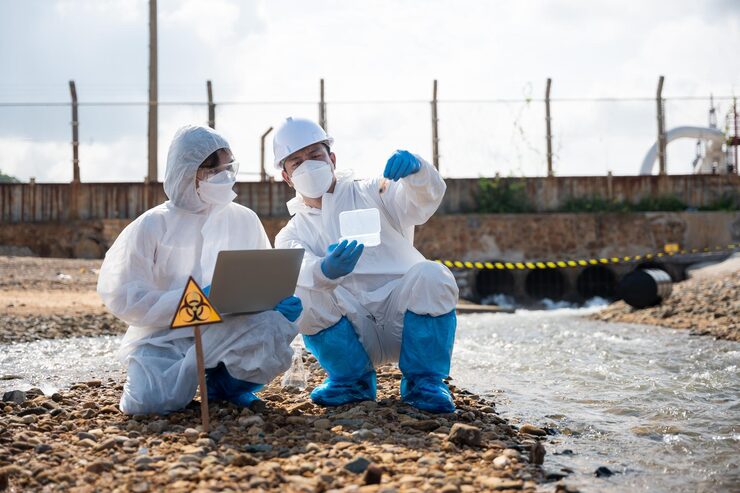
Experts can safely extract minuscule fragments from older walls, ceilings, and legacy floorings using a dust-suppression technique – this is especially important given that asbestos-containing paint is often overlooked in older school buildings and requires the same careful sampling approach. Then, the collected samples are analyzed in an independent NATA-accredited (National Association of Testing Authorities) laboratory. Here, the type of particular asbestos mineral types and concentrations are determined.
Updating the School Asbestos Register
If any hazardous material, such as asbestos, is found upon testing, the schools need to update their official asbestos registry documents immediately. The materials identified in the testing are classified according to their condition.
The discovered asbestos should be labelled either highly volatile friable or stable non-friable. All individuals associated with the renovation of the school building should have access to this register.
Strict Site Containment and Air Management Protocols
After the asbestos is located, the remediation zone should be properly sealed and contained in a high-security environment. In this phase, the main goal is to restrict the spread of microscopic asbestos fibers into the other parts of the active school zones.
Here is how site containment is practiced.
Erecting Heavy-Duty Physical Enclosures
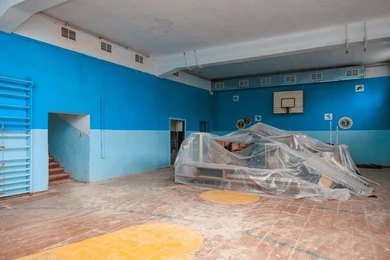
Professional remediation services use high-density polyethylene plastic barriers that totally separate the active remediation zone from adjacent classrooms and hallways. Visible warning placards and restricted area signage prevent unauthorised personnel from accidentally approaching the area.
Implementing Negative Pressure Ventilation Systems
Here is how negative pressure ventilation systems are implemented to manage contaminated air:
- Industrial air machines continuously draw contaminated air out through specialised high-efficiency particulate filters.
- Negative air pressure ensures that any minor barrier breach pulls clean air inward rather than pushing fibers outward.
- Clean, filtered air is vented safely to the external atmosphere, far away from school air intake vents.
Safe Handling and Wetting Practices
Safe physical remediation of asbestos-containing elements requires specialised techniques to minimise dust generation. This is crucial to reducing dust generation.
Professional remediation services such as SERS follow methodical extraction workflows rather than aggressive demolition practices. Once disposed of, the hazardous waste is managed meticulously from the school grounds to its final destination.
Utilising Specialised Fiber Suppression Techniques
Here are some key fiber suppression techniques used by remediation professionals to properly handle the asbestos fibers from spreading:
Amended Water Wetting: An experienced remediation team sprays specialised chemical wetting agents onto materials to bind loose fibers together.
Shadow Vacuuming Methods: Workers hold HEPA-filtered vacuums directly adjacent to tools during cutting or unscrewing procedures.
Manual Component Disassembly: Heavy impact tools are avoided in favor of careful manual unbolting to prevent breakage.
Independent Air Monitoring and Final Clearance Testing
A school renovation zone cannot be handed back to educators based on a visual guess alone. Rigorous, independent scientific validation is required to prove the environment is completely safe for children. This definitive phase provides ultimate peace of mind to parents, teachers, and school boards alike.
Continuous Perimeter Air Monitoring
Air pumps run continuously along containment borders to capture any escaping fibers during the remediation process. Technicians analyze the collection filters daily using phase contrast microscopy to verify that airborne fiber levels remain below 0.01 fibers/mL.
Any elevated reading triggers an automated alarm, halting construction instantly for comprehensive barrier and enclosure inspections.
Wrapping Up
Asbestos particle remediation during the renovation of old Australian school buildings requires seamless containment, wet remediation, and clearance protocol execution. Collaborating with certified hazardous material experts ensures that the school renovation procedure goes smoothly without posing significant risks to the students, teachers, or the community around it. For schools looking to formalise this beyond a single project, an environmental management plan can help maintain long-term site safety.
Partner with SERS for Certified School Remediation Services
Dealing with harmful materials such as asbestos needs professional environmental compliance expertise and proven remediation frameworks. If you own or administer any old school infrastructure in Australia and want to remediate the presence of asbestos in your school, you can reach out to SERS to safeguard your student community.
Frequently Asked Questions
What is the Primary Difference Between Friable and Non-Friable School Asbestos?
Friable asbestos can be easily crumbled into dangerous airborne dust by simple hand pressure. Non-friable asbestos is tightly bound within solid matrices, like vinyl tiles or cement sheeting, making it less volatile unless cut.
Can School Maintenance Staff Dispose of Small Amounts of Asbestos Safely?
No. Australian workplace health and safety regulations strictly mandate that only licensed, specialised asbestos remediation contractors can handle asbestos abatement within educational institutions to prevent accidental contamination.
How Long Do Schools Need To Keep Asbestos Clearance Certificates?
Schools are legally required to retain all asbestos registers, audit reports, air monitoring data, and official clearance certificates permanently, or for at least 30 years under workplace health safety mandates.
What Happens if Unexpected Asbestos is Uncovered During Active Classroom Hours?
Work must stop instantly. The immediate area must be evacuated, sealed with plastic sheeting, and isolated before a licensed occupational hygienist is called to assess the site and implement containment.
Is it Safe to Perform Asbestos Remediation While Students Are on Campus?
While engineered negative-pressure containment allows it legally, best practice dictates scheduling high-risk asbestos abatement exclusively during school holiday periods. This eliminates any potential exposure risk to children.