

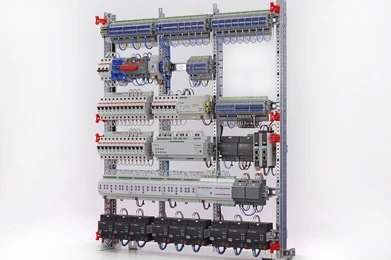
Undocumented switchboard panels can include asbestos, and during renovations, there is a high chance of exposure. Bramite, however, is the modern asbestos-free backing panel that looks similar to the older asbestos-containing panels, so identifying them can be hard. This blog explains how you will know whether your switchboard has asbestos in it.
Key Takeaways
- Bramite: It is an asbestos-free, electrical-grade paper-phenolic material that is used in modern Australian sub-boards and meter boxes, replacing the older asbestos-containing panels.
- Identification: You cannot differentiate between a Bramite and an asbestos-containing backing panel just by looking at it. It is only possible through NATA-accredited laboratory testing.
- Compliance: Undocumented pre-2004 panels should be considered asbestos-containing and hazardous before an environmental assessor confirms that it is not.
Bramite, a brand name for backing panels, is free of asbestos and is made of paper-phenolic resin. It is mainly used for switchboards and meter boxes in Australia. This replaces the older panel types because most of them contained asbestos.
But how can you tell them apart? Especially when you need panels for renovating, buying, or managing a pre-2004 building, because you will need to buy the one that is legally allowed in Australia.
This blog explains how to differentiate between an asbestos-containing panel and an asbestos-free one, when to conduct a test, and what Australian regulators expect.
Bramite and Its Uses
Wondering what Bramite is? It is the trade name commonly used by electricians for black and grey insulating panels. These panels carry the switchgear that we find inside switchboards and meter boxes. Bramite is described in supplier listings as an asbestos-free, electrical-grade paper-phenolic resin laminate that meets a 960℃ glow-wire standard.
What It Is Made Of
- Layers of paper impregnated with phenolic resin and they are compressed into a rigid sheet
- It is usually 6mm thick, and full sheets are 1218 x 914 mm (standard: 2400 x 1220 mm), which are available in pre-cut sizes.
- Manufactured according to the AS 1795 (Type X) standards for electrical insulation
Where It Can Be Found
You can find Bramite in:
- Meter panels and commercial sub-boards
- Replacement backing in upgraded domestic switchboards
- Machinery and control-panel enclosures
Is There Asbestos in Bramite?
Now you might have this question: Is Bramite asbestos? The short answer would be “no”.
Products sold as Bramite are all marketed as asbestos-free. The risk only remains with older backing boards, which were originally made from asbestos composites. All of them were installed and manufactured before the 2004 ban.
If you have any board/panel at your workplace or home that is undocumented, we suggest you get it tested by our NATA-accredited laboratory. It will be legally and environmentally safer to do that instead of just trusting the panel by its looks.
But why is Bramite confused with asbestos?
- Electricians often document their work by writing “replaced asbestos panel with Bramite”. This pairs both words on one invoice.
- People searching for “Bramite panel white asbestos” often think it is chrysotile. However, asbestos databases list the presence of amosite (brown) in old blackboards as well. Both fibres are hazardous.
- Tradespeople also use Bramite for any backing panel, so a label is never proof of the age and composition of the panel you come across.
Differentiating Bramite and Asbestos Backing Panels
You won’t know whether it contains asbestos just by looking at it. But you can see some warning signs and also check the existing paperwork. If a panel is undated and undocumented, we suggest you treat it as asbestos before a NATA-accredited laboratory says that it is not.
The Warning Signs to Look Out For
- There will be a strong tar smell (because of the pitch/bitumen binder)
- It will be dark brown or black
- It is stiff with a rough, fibrous, or wood-like surface
- It has stamped names like Zelemite, Lebah, Asbestos, or Miscolite
- There are ceramic rewireable fuses on a dark panel, common on older asbestos-backed boards
- You find an electricity distributor’s caution sticker on the board or inside the meter box
What Modern Panels Look Like
A modern Bramite panel will have a smooth, uniform black or grey factory finish, with clean-cut edges. There will be modern RCDs and circuit breakers in it instead of rewireable fuses. The colour alone does not prove anything because old and new boards are both dark.
Documents You Should Ask For
Ask for paperwork including:
- Supplier listings often refer to the product as Bramite insulated panel, so check the wording.
- Also look into the part code on invoices or datasheets.
- Search the electrical compliance paperwork and the asbestos register, especially for workplaces.
Testing Your Switchboard Panel for Asbestos
Proper laboratory tests can confirm whether asbestos is present in a switchboard. At SERS, our licensed asbestos assessor takes a small sample, and then we send it to our NATA-accredited laboratory to identify the fibres.
We use polarised light microscopy to test the sample as per the regulations of AS 4964. If the previous owner fitted a Bramite board but never left documented proof, it is best to officially test it to ensure safety.
You should also not sample it yourself.
This is because health regulators advise common people against destructive sampling, as it will only increase your exposure to it. Moreover, trained/licensed samplers wet the material, use hand tools only, and lay drop sheets, which are never accessible to common people.
Your Legal Obligations
Asbestos panels can stay as they are if they are in good condition and undisturbed. But if it is drilled, cut, or removed, that asbestos triggers safety duties. Have them identified and assessed by our consultants, and keep a register and asbestos management plan that should be reviewed regularly.
They must remove any type of friable asbestos and those more than 10 m2 in size in case of non-friable asbestos. See that the waste is double-wrapped, labelled, and taken to a licensed facility.
Conclusion
The name Bramite itself will never be the problem. The unlabelled black panel that you saw in your building is the actual risk. If there is a switchboard that was there from before 2004 and you want to work on it, get it assessed first. That’s the only way to identify the possible presence of asbestos.
Bramite and Old Black Back Panels at Home? There Can Be Asbestos in Them!
Get in touch with us to arrange a legally compliant asbestos assessment and testing service with our environmental consultants at SERS.
Frequently Asked Questions
What Should I do If My Older Backing Board is Damaged or Cracked?
First of all, avoid touching the panel, isolate the power if it is safe to do so, and immediately contact us for a professional hazard assessment.
Can I Drill Into a Bramite Panel?
Yes. But only after you test it and the lab test confirms that it is modern and asbestos-free. Do not drill unverified pre-2004 boards.
Is Asbestos inside Switchboards a Risk If the Panel is Left Untouched?
Undisturbed asbestos panels, if they are in good condition, are generally of low risk. But they need regulatory monitoring to ensure that they are undisturbed, and registers are mandatory.
How Long Does a NATA-Accredited Lab Take to Test Asbestos?
Standard testing can typically provide results within 24-48 hours of sample collection. We take the same time to report results.
Who is Legally Responsible for Maintaining the Asbestos Register?
For commercial switchboards, building owners, landlords, and property managers are supposed to be responsible for maintaining and updating the register.
