
Water testing is important to ensure quality drinking water to sustain a healthy life. But in a diverse and remote land of Western Australia’s mining belt, the task becomes more difficult. In this blog, we identify water testing challenges in Western Australia.
Key Takeaways
- High salinity and TDS levels in Western Australia’s mining belt can damage testing equipment and affect the accuracy of water quality results.
- Acid mine drainage and heavy metal contamination make it difficult to monitor fluctuating pH, minerals, and toxic substances in mining-affected water.
- Remote mining locations create logistical challenges for collecting, transporting, and testing water samples at NATA-accredited laboratories.
- Seasonal changes and TSF seepage can alter water quality and make it difficult to establish reliable baselines or identify sources of contamination.
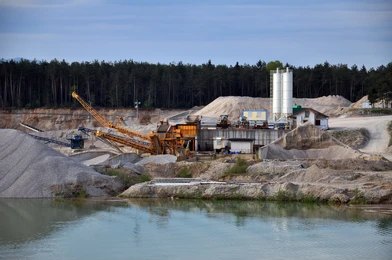
The key mining areas of Western Australia are Pilbara, Goldfields, Mid-West & South West, and the Kimberley. These areas are rich in minerals. Besides, their remote location makes it challenging from a logistical perspective to conduct water testing.
Due to the mineral-rich topography of the area, the pH and TDS levels of the drinking water in the area are subject to change from time to time. This leads to inaccurate results of the water quality if not monitored properly.
So, let’s walk you through the challenges of water testing in the area.
1. High TDS Levels and Extreme Salinity
The Western Australian region sits on ancient saline aquifers. So, the highly concentrated dissolved salts can lead to corrosion and scale formation of the water testing equipment. The chloride ions and other salts react with the protective layer on the metal equipment. This leads to damage to them, and an inaccurate water testing result might come out.
Besides, the total dissolved solids or TDS can lead to mineral build-up in the equipment. As a result, corrosion of the equipment will follow. TDS meters are designed to measure minerals in water, but constant exposure to high TDS levels of water might damage the sensors and generate inaccurate results.
With inaccurate results, mine water management might be challenging.
2. Acid Mine Drainage
It is when an acid and metal-rich water flows from metal or coal mines. Here, sulphide-rich minerals react with air and water and form sulfuric acid. As a result, the pH in the water increases significantly. At the same time, the presence of iron, aluminium, copper, and arsenic increases significantly. So, no matter which type of mine water treatment technologies are used in maintaining the water quality, the frequent changes in mineral and pH levels make it difficult to get a correct result.
3. Heavy Metal and Metalloid Contamination
In the mining area, the mining activities release trace materials. The presence of these minerals, even at low levels, can cause high levels of toxicity. Even if they are present in low quantities, they lead to a high level of toxicity.
Moreover, it becomes difficult to determine if the minerals are present in the water naturally or due to the mining activities. The testing becomes more difficult to determine bioaccumulation risks, source tracking, and proper risk assessment. As the level of trace materials fluctuates, a proper mine water treatment becomes difficult.
4. Remote and Inaccessible Location
Most mining belt area is based in remote locations, and some are even inaccessible. Water testing in these areas can be quite difficult. Using equipment with advanced mine water treatment technologies can be difficult to use in such a remote area.
Moreover, collected samples can be difficult to bring to the cities where they can be tested in a NATA-accredited laboratory. Needless to say, there is no scope for setting up a NATA-accredited laboratory in such a remote location as it’s not financially viable.
5. Flash Flooding and Seasonal Variability
In Western Australia, a distinct wet and dry season makes it more difficult for water testing. In the wet season, with continuous rain, the water level increases in the water body, diluting the level of mineral contamination. On the other hand, in the dry summer time, flash flood increases the mineral deposits in the water. So, it becomes difficult to determine a baseline water quality and adopt a mining water treatment plan.
6. Tailings Storage Facility (TSF) Seepage
In the mining belt of Western Australia, Tailings Storage Facilities are built to contain waste slurry or tailings generated from the mining work. It may contain ground rock, water, and other harmful chemicals. An unnoticed seepage from the TSF might contaminate the local water bodies.
If there is the slightest leakage in the TSF, it may contaminate the local water bodies. Then, a mine water management plan might not work if the source of contamination goes unnoticed. Unnoticed TSF leakage also makes it difficult to differentiate the natural mineral level in the water from contamination due to seepage, leaving a water testing result ineffective.
Also Read: Why Mining Operations Require Water Monitoring Solutions?
In Summary
Water testing can be challenging in the remote mining belt of Western Australia. Collecting samples and bringing them to laboratories to get an accurate result. Besides, the water testing equipment can also become inactive due to the high level of minerals in the water, leading to inaccurate results. Contact SERS for assistance today!
Frequently Asked Questions
What Type of Water Testing Is Required in the Mining Area?
In general, pH level testing, TDS, and mineral identification through mine water testing are necessary. Get in touch with us for a better recommendation for water testing.
Can I Use a Natural Water Source Near a Mining Site as Drinking Water?
No, without testing the water quality, you should not use it as a drinking source. Get in touch with us to get the water tested.
How Do I Know If the Soil Is Contaminated?
There is no single way to say that the soil is contaminated. You will need to test the soil as well.