
Asbestos disposal is one of the most tightly regulated processes in Australian construction and renovation. Getting it wrong, even unintentionally, carries serious legal consequences and genuine health risk to workers, residents, and the public.
Key Takeaway
- Strict Legal Rules: Asbestos disposal in Australia requires double-wrapping, proper labeling, and transport by licensed carriers to specialized landfills to avoid severe fines.
- Mandatory Pre-Renovation Inspections: Homes built before 1990 and commercial properties built before 2003 must be professionally tested for asbestos before any work begins.
- Severe Health Risks: Disturbing asbestos during renovations releases invisible, highly dangerous fibers into the air that cause serious lung diseases.
- Structured Safe Process: Compliant asbestos management requires a strict step-by-step workflow, from initial survey and containment to independent safety clearance.
Australia has one of the highest per-capita rates of mesothelioma in the world. This is a direct result of the widespread use of asbestos-containing materials in residential and industrial construction through the mid-20th century.
Asbestos was banned in Australia in 2003. But it remains present in millions of buildings still standing today. This is what makes safe disposal of asbestos a necessity.
Safe asbestos waste disposal is more than just following a procedure. This is about preventing fibre release at every stage from identification through to final disposal. The process is very important, and a single lapse in that chain creates a risk of exposure. So, it is important to understand every step.
Why Asbestos Safety is a Must During Renovations
Renovation works include stages that trigger asbestos disturbance in Australia. Stages like cutting, drilling, sanding, or demolishing materials release respirable fibres. These are invisible to the naked eye but remain suspended in the air for extended periods, making them dangerous.
Asbestos renovation risks are highest in:
- Residential homes built before 1990: Fibro or asbestos cement cladding, textured ceilings, floor tiles, eaves, and internal wall sheeting are all commonly present.
- Industrial and commercial facilities built before 2003: Pipe lagging, gaskets, fire-rated boards, spray-applied insulation, and roofing materials are frequent sources.
- Post-flood or storm-damaged buildings: Damaged ACMs can release fibres before any active renovation work begins.
- Asbestos safety during renovations: Must be planned before the first tool is picked up, not managed reactively once material is disturbed.
Identifying Asbestos Before Renovation Begins
Before any renovation on a pre-1990 residential or pre-2003 industrial property, an asbestos survey must be conducted by a competent person. In most Australian states, this means a licensed asbestos assessor for friable materials and a trained competent person for non-friable materials.
Common locations where asbestos is found in renovation contexts:
| Building Type | Typical ACM Locations |
|---|---|
| Residential, pre-1990 | Wall and ceiling sheets, eaves, floor tiles, roof tiles, guttering, fencing, textured paint |
| Commercial, pre-2003 | Pipe insulation, switchboard backing, ceiling tiles, fire doors, roofing and cladding |
| Industrial, pre-2003 | Boiler insulation, gaskets, spray coatings, ductwork insulation, floor coverings |
Table: Types of Buildings and their ACM Locations
Never assume a material does not contain asbestos based on visual inspection alone. Laboratory testing of a collected sample is the only reliable method of confirmation.
Asbestos Waste Disposal: The Legal Requirements in Australia
Asbestos disposal is governed by WHS legislation and state environmental protection laws. The requirements differ slightly by jurisdiction, but the core obligations are the same across Australia.
Key legal requirements for asbestos waste disposal include:
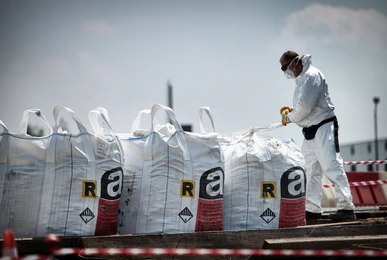
- All asbestos waste must be double-wrapped in heavy-duty, 200-micron polyethylene sheeting and sealed with duct tape.
- Packaging must be labelled with the approved asbestos warning label before transport.
- Asbestos waste must only be transported by a licensed waste carrier.
- Disposal must occur at a licensed asbestos waste disposal facility, not a general landfill.
- Waste transport must be documented using a waste tracking consignment note in most states.
- No asbestos waste may be stockpiled on site for extended periods without regulatory approval.
Disposing of asbestos waste through unlicensed channels, including skip bins intended for general construction waste, is a serious offence that attracts significant penalties for individuals and corporations.
Where Is Asbestos Disposed of in Australia?
Asbestos must be disposed of at a licensed facility designated to accept asbestos waste. Each state maintains a register of approved facilities.
- Western Australia: Tox Free, Cleanaway facilities, and approved metropolitan landfill sites accepting asbestos.
- Queensland: Licensed solid waste landfills with asbestos-specific cells; consignment note required.
- New South Wales: EPA-licensed facilities only; asbestos waste tracking system applies.
- Victoria: Approved landfills under EPA Victoria’s industrial waste provisions.
- South Australia, Tasmania, ACT, NT: State EPA-approved facilities with jurisdiction-specific documentation requirements.
It is the duty of your environmental consultant or licensed remediator to confirm the approved asbestos disposal facility for your specific location and material type.
What is the Process of Safe Asbestos Disposal
Asbestos renovation works must follow a documented sequence to remain compliant and protect all persons on site.
Step 1: Asbestos survey: Identify all ACMs in the scope of renovation works.
Step 2: Disposal planning: Determine whether materials are friable or non-friable. Engage a licensed remediator accordingly.
Step 3: Site preparation: Establish exclusion zones, erect signage, set up decontamination facilities, and notify the relevant regulator if required (10-day notice for friable works).
Step 4: Controlled disposal: Dispose of ACMs under containment with appropriate respiratory and personal protective equipment. Wet methods to suppress fibre release where practicable.
Step 5: Packaging and labelling: Double-wrap and label all asbestos waste immediately at point of disposal.
Step 6: Clearance inspection: An independent licensed assessor inspects and air monitors the area before containment is removed.
Step 7: Waste transport and disposal: A licensed carrier transports to an approved facility with documented waste tracking.
Managing Asbestos on Industrial Renovation Sites: Additional Considerations
Industrial asbestos renovation introduces complexities not present in residential contexts. Operational facilities may have multiple ACM types across large floor areas, active plants and processes adjacent to disposal zones, and a larger workforce potentially exposed.
Additional controls required on industrial sites include:
- Continuous personal air monitoring for remediators and adjacent workers
- Negative pressure enclosures for friable asbestos disposal in occupied facilities
- Documented re-entry clearance certificates before normal operations resume
- Integration with the site’s broader safety management system and emergency response plan
Industrial asbestos renovation projects should be managed under a formal Asbestos Disposal Control Plan that addresses all of the above.
Planning an Asbestos Renovation? SERS Can Help You Do It Right.
SERS provides licensed asbestos surveys, air monitoring, and waste disposal management for residential and industrial renovation projects across Perth, Brisbane, Sydney, and Newcastle. Our team works with your contractors to keep the project on schedule while ensuring full regulatory compliance from survey through to asbestos disposal.
Contact SERS today to arrange your pre-renovation asbestos assessment.
Frequently Asked Questions
Can I Dispose of Asbestos Myself From My Home?
No, not at all. You must hire a licensed remediator for the safest course of action. This is also legally required for friable asbestos regardless of quantity.
What is the Difference Between Friable and Non-friable Asbestos in Renovation Contexts?
Non-friable asbestos is a material where fibres are locked within a solid matrix. Friable asbestos is crumbled by hand pressure, releasing fibres readily, and it is far more dangerous and requires Class A licensed remediation.
Do I Need to Notify the Regulator Before Starting Asbestos Disposal?
Yes, absolutely. This requires 5 to 10 business days’ advance written notice to the relevant state WHS regulator in most jurisdictions.
What Happens if Asbestos Waste is Found in a General Skip Bin or Landfill?
The EPA will investigate whether asbestos waste has been dumped illegally. This may lead to stopping work at the site where the waste came from.
How Long Does Asbestos Disposal Take on a Residential Renovation Project?
A standard residential remediation takes 2-5 days, including preparation, disposal, clearance inspection, and waste transport. Projects involving friable materials or larger structures will take longer.