
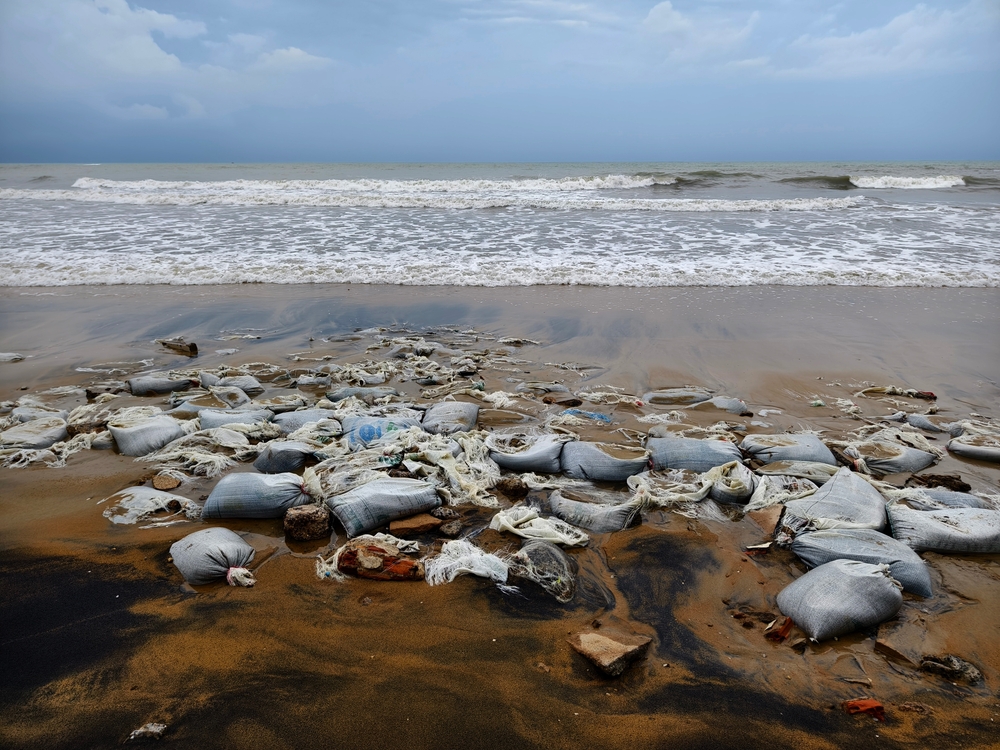
Land contamination threatens Australia’s oceans through surface runoff, groundwater seepage, and sediment transport, depositing toxins like PFAS, heavy metals, and hydrocarbons into marine ecosystems. These pollutants jeopardise coastal property values, tourism, and biodiversity, particularly in the Great Barrier Reef and Perth’s coastline.
Key Takeaways
- Invisible Pathways: Contaminants often reach the ocean via Submarine Groundwater Discharge (SGD), which carries significantly higher nutrient loads to the seabed than river systems, causing more harm than good
- The Contaminant Threat: PFAS, hydrocarbons, and heavy metals from legacy industrial sites are the primary 2026 targets for EPA audits due to their high mobility and bioaccumulation in the food chain
- Strict Liability: Under “Polluter Pays” principles and synchronised state laws, corporations face multimillion-dollar fines and mandatory remediation costs if land-based plumes impact sensitive marine environments.
Australia has always been known for its coastline, like the Great Barrier Reef, the Murray-Darling River system, and the underground Great Artesian Basin. Sadly, most of it has been a victim of land contamination due to the legacy of industrialisation and urban expansion.
With plastic pollution being the primary type, pesticides, metals, herbicides, debris, and terrigenous sediments are all contaminating the marine ecosystem. One such example is the death of 5,000 and 15,000 turtles in the Gulf of Carpentaria after being trapped in ghost fishing nets, usually made of plastic.
This shows the extent of threats of contamination to oceans and coastlines, which is a prime focus for EPA audits and ESG reporting.
How Does Soil Contamination Travel from Land to Sea?
Soil or land contamination travels through three major pathways to reach the water bodies. Surface Water Runoff, Atmospheric Deposition, and Submarine Groundwater Discharge (SGD).
|
Contamination Pathway |
Mechanism | Marine Impact |
|---|---|---|
|
Surface Water Runoff |
Rainwater carries topsoil pollutants into drains and estuaries. | Sudden spikes in nutrient levels and heavy metal toxicity. |
| Submarine Groundwater Discharge | Contaminants leach through soil into the water table. |
Chronic, long-term exposure to seagrass and coral nurseries. |
| Atmospheric Deposition or Sediment Transport | Erosion of contaminated coastal cliffs or construction sites. |
Smothering of benthic habitats and release of legacy chemicals. |
Table 1: The Pathways in Which Toxins Reach the Ocean
Why SGD is the Most Concerning of All
In Australia, SGD is the most significant yet least visible threat as it generates 10 to 15 times more flux than river inputs, from aquifers to the seabed. This is because it accounts for two-thirds of phosphorus inputs, which is around double the normal amount of nitrogen entering the reef.
And this excess amount itself can lead to harmful algal blooms and fish diseases. Not considering how it might act as a conveyor belt for Potential Contaminants of Concern (PCOCs) as well.
Which Contaminants Are Most Dangerous to Australian Marine Life?
The most dangerous contaminants that are actual threats to the oceans and coastlines off Australia in 2026 are the following. These substances bioaccumulate in the food chain, threatening both human health and marine life.
PFAS (Per- and Polyfluoroalkyl Substances)
The “Forever Chemical” crisis is the top emerging issue for coastal areas of Australia because these are highly mobile in water and do not break down easily. PFAS mainly leach from airports, defence sites, and fire training grounds, then enter the coastal aquifers. They affect fish populations and recreational swimming areas.
Petroleum Hydrocarbons
Usually begins from industrial sites, mining, and leaking underground storage tanks, which pose a severe risk to water quality. Includes fuel, oil, or Polycyclic Aromatic Hydrocarbons (PAHs) that act as recalcitrant contaminants that damage aquatic ecosystems.
Heavy Metals
Commonly found in legacy industrial sites around harbours like Port Adelaide or Botany Bay, and contains high amounts of Arsenic, Cadmium, Lead, and Mercury. These metals bind with the marine sediments, and when disturbed due to coastal construction and dredging, they enter the water column. These, when consumed by shellfish, can lead to long-term ecological damage.
Why Should Land Project Developers Care About Coastal Contamination?
Projects that are to be developed near coastal areas in Australia should consider coastal contamination because of the “Polluter Pays” principle. Including the fact that a project being a source of contamination can affect asset valuation.
2026 Regulatory Landscape: EPA and the Duty to Notify
The following table outlines the 2026 legislative framework for EPA supervision and mandatory notification requirements.
| State | Primary Legislation | Notification Trigger for “Sensitive Environments” | Maximum Corporate Penalty (Non-Compliance) |
|---|---|---|---|
| NSW | Contaminated Land Management Act 1997 (S60) & POEO Act | Awareness of contamination migrating to “materially harm” adjacent marine parks or waterways | $2,000,000 for individuals and $10,000,000 for corporations |
| VIC | Environment Protection Act 2017 | Any “notifiable contamination” that exceeds thresholds or threatens human health/environment | Penalty of $1,817,400 (for a body corporate) or $363,480 (for an individual) under the General Environmental Duty (GED) |
| QLD | Environmental Protection Act 1994 (EPOLA 2024 Reforms) | Awareness of land contamination or an incident causing/threatening serious environmental harm | Depends on the case |
| WA | Contaminated Sites Act 2003 | Owners/occupiers must report “known or suspected” contamination within 21 days of discovery | Penalty $125,000, and a daily penalty of $25,000 on failure to provide a written submission |
| SA | Environment Protection Act 1993 (Part 10A) | Must notify the EPA upon discovery of site contamination that affects groundwater or adjacent sensitive land | Depends on the case |
| TAS | Environmental Management and Pollution Control Act 1994 (S32) | Mandatory notification within 24 hours if land is, or may be, contaminated or threatens “serious environmental harm” | Environmental nuisance: penalty up to $30,000
Material environmental harm: penalty up to $250,000 and 2 years prison Serious environmental harm: penalty up to $1,000,000 and 4 years prison. |
Table 2: The Laws Applicable for All States
How Does This Impact on the Blue Economy
The “Blue Economy” comprises fishing, tourism, and aquaculture, which contribute more than $80 billion annually to the national economy, as per the Australian Institute of Marine Science (AIMS). If the land-based contamination remains unchecked, it can threaten the health of the water bodies like the Great Barrier Reef or the Ningaloo Coast, directly impacting these industries.
How Can We Stop Land Contamination from Reaching the Ocean?
Through proactive, data-driven Phase Intrusive Investigations and Groundwater Monitoring, land contamination can be stopped. We at SERS, as an agency that offers remediation services:
- Identify the source of the land contamination and design a strategy that intercepts the plume before it reaches the coastline
- Utilise High-Resolution Site Characterisation (HRSC) to map the movement of contaminants through the soil profile
Implement Borehole Monitoring to install groundwater monitoring wells to track plume migration in real-time - Use remediation techniques like Permeable Reactive Barriers (PRBs) by building a wall underground to neutralise contaminants as the groundwater passes through it
Do Not Let Your Land Project Contaminate Australia’s Already Endangered Marine Ecosystem!
Implement Phase II Soil Testing and advanced groundwater remediation services from SERS to protect both the environment and your commercial assets from the legal and financial risks of ocean pollution! Contact us today to get your site assessed and remediated.
Frequently Asked Questions
Does My Site Need a Coastal-specific Assessment?
If your property is within a coastal catchment or sits above a high-water table, standard soil tests may miss SGD risks.
How Does “Blue Economy” Health Affect My Asset’s Value?
Contaminated sites near tourism or fishing hubs face higher scrutiny, potentially lowering commercial resale value and increasing insurance premiums significantly.
Can I Be Held Liable for Legacy Contamination?
Yes. Under current Australian laws for some states, the owner or occupier can be issued remediation orders even if they didn’t cause the pollution.
What is the Role of HRSC in Coastal Protection?
High-Resolution Site Characterisation (HRSC) maps specific plume pathways, allowing for precision remediation that stops toxins before they breach the shoreline.