

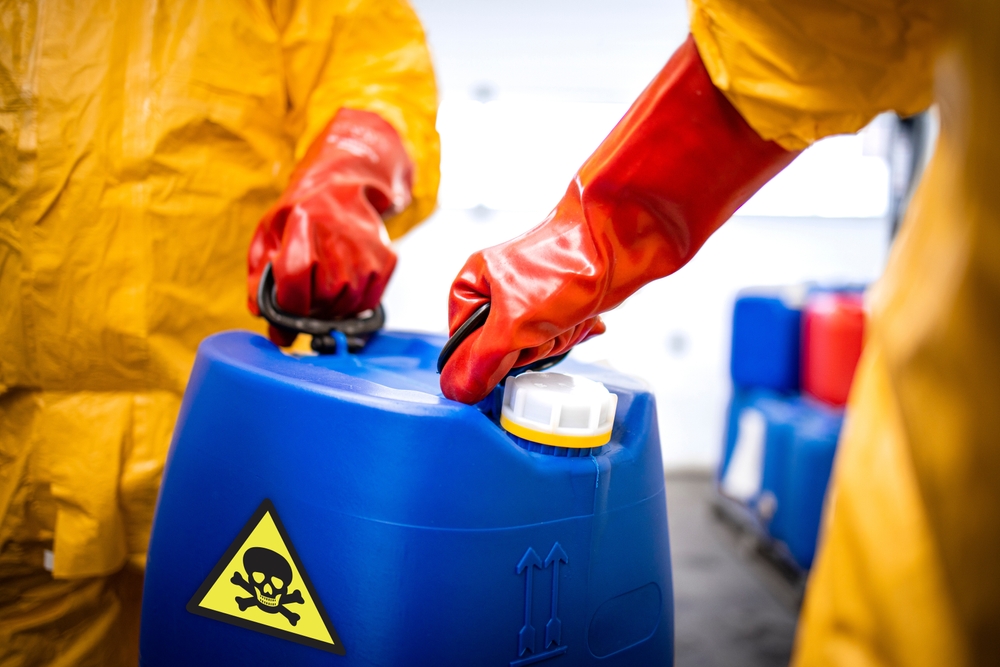
Navigating Australian pre-demolition laws can feel like a regulatory minefield. You should know the hidden hazardous materials, the absence of which leads to severe fines and project shutdowns. You can solve this with comprehensive HAZMAT surveys and air monitoring, protecting your crew, your timeline, and your bottom line.
Key Takeaways
- Legal Compliance Mandate: Australian contractors must secure an independent pre-demolition HAZMAT survey to legally identify structural contaminants before commencing site demolition or renovation work
- State-Level Enforcement: While federal frameworks exist, compliance relies on state-specific legislation and regulators, requiring strict adherence to local codes like SafeWork NSW or WorkSafe Victoria
- Rigorous Risk Workflow: Supervisors must execute a five-phase safety roadmap, transitioning from initial occupational hygienist inspections to securing final, independent clearance certificates for handovers
For contractors in Australia, it is a legal obligation under the Australian Work Health and Safety (WHS) laws to identify all hazardous materials before demolitions. This applies to all structures about to be taken down or renovated, especially if the building was made around the 1980s and 90s* (due to possible asbestos presence).
Contractors also need to conduct a comprehensive Pre-Demolition Hazardous Materials Survey. And for that, you will need to know which materials are hazardous. This blog will help you understand hazardous materials in construction sites in Australian demolitions.
| Statutory Australian Standard | Core Technical Scope & Purpose | Mandated Role in Pre-Demolition Strategy | Consequences of Compliance Failure / Omission |
|---|---|---|---|
| AS 2601-2001
(The Demolition of Structures) |
Sets out the absolute safety, structural sequencing, and planning controls required to execute mechanical demolition across Australia. | Legally anchors the pre-demolition survey. Section 2 strictly dictates that all hazardous materials must be identified and safely removed before any main structural demolition begins. |
Immediate issuance of statutory prohibition notices by state WHS inspectors; total site closure and heavy corporate fines for reckless endangerment. |
|
AS 4482.1-2005 (Sampling Sites with Contaminated Soil) |
Establishes the mandatory scientific protocols for sampling grid design, sample numbers, and handling non-volatile and semi-volatile contaminants. | Governs the technical validity of Phase II Detailed Site Investigations (DSI). It dictates the exact physical spacing of boreholes needed to locate hidden chemical pockets. |
Invalidation of lab datasets by state EPAs or Statutory Auditors; forced re-drilling of site lots, resulting in severe project delays and blown budgets. |
|
AS 4361.1:2017 (Industrial Hazardous Paint Management) |
Specifies the testing, containment, and environmental collection methods for handling heavy-metal and lead-based coatings on industrial steelwork. | Directs how teams treat structural elements before hot-work (welding/oxy-cutting). Mandates precise surface swipe testing and physical containment boundaries. | Toxic lead fume or lead dust contamination spreading through local neighborhoods; severe EPA fines and immediate corporate liability for environmental pollution. |
| AS/NZS 1716:2012
(Respiratory Protective Devices) |
Defines the manufacturing performance ceilings, particle filtration metrics, and testing regimes for respiratory protective equipment (RPE). | Controls worker protection gear inside active hazard zones. Mandates the use of certified P2 or P3 particulate respirators paired with formal fit-testing logs. |
Chronic occupational worker exposure to respirable crystalline silica or friable asbestos fibers; open exposure to costly multi-million dollar common-law injury lawsuits. |
Table 1: The Australian Standards Compliance Blueprint for Demolition Work
*Note: A total national ban on the manufacture, use, and importation of asbestos did not take effect in Australia until 31 December 2003. Any residential or commercial structure built or renovated up until December 2003 carries an active risk of containing asbestos-containing materials (ACMs).
Primary Hazardous Materials Profile & Operational Action
| Hazardous Material Classification | Governing Scientific & Regulatory Framework | Statutory Action Thresholds & Limits | Mandatory Pre-Demolition Engineering Control | Required Post-Disposal / Clearance Verification |
|---|---|---|---|---|
| Asbestos Containing Materials (ACM)
(Friable vs. Non-Friable Profiles) |
Governed strictly by state WHS Regulations (e.g., Chapter 8 of the NSW WHS Regulation). Encompasses all structural assets built or modified up to the 31 December 2003 comprehensive national ban. | Class A License: Mandatory for any quantity of friable asbestos.
Class B License: Mandatory for non-friable asbestos exceeding 10 m². |
Full isolation with negative-pressure enclosures for friable materials. Continuous wet-mist suppression for non-friable sheeting to block fiber release. |
Visual clearance inspection by an independent competent person for Class B; independent static air monitoring loops and a formal Clearance Certificate for Class A. |
| Respirable Crystalline Silica (RCS)
(Concrete & Masonry Dust) |
Regulated under Safe Work Australia’s model codes. Note the national regulatory transition from a Workplace Exposure Standard (WES) to a strict Workplace Exposure Limit (WEL). | Current statutory limit fixed at 0.05 mg/m³ over an 8-hour Time-Weighted Average (TWA), with active enforcement protocols. | Mandatory integration of local exhaust ventilation (LEV), on-tool water suppression systems, and industrial H-Class HEPA vacuums during concrete crushing. | Real-time continuous dust logging along the site boundary line; mandatory occupational health monitoring programs for exposed personnel. |
| Lead-Containing Paint & Dust (LCD)
(Legacy Heavy Metallic Pigments) |
Governed by AS 4361.1:2017 (Guide to Hazardous Paint Management in Industrial Applications) across structural frame coatings. | Defined as paint containing in excess of 0.1% lead by dry weight (lowered from the legacy 1.0% threshold). | Localized smoke/fume extraction hoods during hot-work cutting or structural steel welding; strict isolation of the target lead process area. |
Surface dust swipe testing evaluated by a NATA-accredited laboratory, satisfying strict loading safety metrics (e.g., 1 mg/m² for interior floors). |
| Polychlorinated Biphenyls (PCBs)
(Synthetic Chemical Dielectrics) |
Managed under the National Strategy for Management of Scheduled Waste frameworks. Commonly found in legacy commercial buildings. | Materials containing PCB concentrations exceeding 50 mg/kg (ppm) are legally classified as Scheduled Waste. | Specialized chemical-resistant personal protective equipment (PPE); immediate chemical vapor-lock drum containment to prevent leakage. | Verification of certified EPA waste transport dockets; visual validation of sealed storage cells before off-site haulage occurs. |
| Synthetic Mineral Fibers (SMF)
(Glasswool & Rockwool Materials) |
Covered under the National Code of Practice for the Safe Use of Synthetic Mineral Fibres. | No specific low-volume license limit, but subject to general airborne nuisance dust triggers under general WHS duties. | Full PPE deployment including P2 respiratory protection, disposable coveralls, localized water misting, and careful manual bagging during strip-outs. |
Visual validation of bare, decontaminated structural cavities by the site supervisor before closing wall linings. |
Table 2: Primary Hazardous Materials in Australia
Building demolition in Australia needs to consider multiple hazardous materials on construction sites. Here’s what you, as a contractor, should look for before demolition.
Asbestos (Friable vs. Non-Friable)
Friable asbestos that can be crumbled by hand is the high-risk one that needs to be remediated. Non-friable ones should be disposed of before demolition lest it gets disturbed.
But you won’t need a license to dispose of it if it is less than 10 m² in size. However, Class A licenses are required for disposing of any quantity of friable asbestos, and Class B is for disposing of more than 10m² of non-friable material.
Respirable Crystalline Silica (RCS)
Crystalline silica should also be removed before breaking anything to prevent it from spreading in the air. You will need to consider dust suppression compliance, engineered stone restrictions, and mandatory high-efficiency particulate air (HEPA) vacuum controls during concrete pulverisation.
Lead-Containing Paint & Dust (LCD)
Lead can usually be found in buildings built before 1997. Document this risk and plan your demolition accordingly to avoid the threat of lead fumes during hot work (cutting/welding) on coated structural steel.
Polychlorinated Biphenyls (PCBs)
Identify legacy risks in existing electrical capacitors, transformers, and old fluorescent light ballasts if the building is very old. These PCBs have been banned since 1975, as they don’t burn easily, persist in the environment, and bioaccumulate through the food chain, which can harm human health.
Synthetic Mineral Fibers (SMF)
You should also address rockwool and glasswool insulation management during strip-outs because no one should be exposed to high amounts of SMFs in any type of building.
Cross-Jurisdictional Compliance: State-by-State Legislation
Safe Work Australia provides a federal framework for identifying these examples of hazardous materials in construction. But the enforcement of those frameworks and explicit statutory codes resides within individual state laws as governed by state Work Health and Safety (WHS) regulators (such as SafeWork NSW, WorkSafe Victoria, and WorkSafe WA).
| Jurisdiction (State) | Primary Governing Legislation | Regulatory Authority | Key Code of Practice/Regulation |
|---|---|---|---|
| New South Wales (NSW) | Work Health and Safety Act 2011 (NSW) | SafeWork NSW | WHS Regulation 2011 (Chapter 4: Hazardous Work) |
| Victoria (VIC) | Occupational Health and Safety Act 2004 (VIC) | WorkSafe Victoria |
Guide to the Occupational Health and Safety Regulations 2017 (Part 4.1—Hazardous substances & Part 4.3—Asbestos) |
| Queensland (QLD) | Work Health and Safety Act 2011 (QLD) | Workplace Health and Safety Queensland (WHSQ) | Demolition Work Code of Practice 2021; Asbestos Code of Practice 2021 |
| Western Australia (WA) | Work Health and Safety Act 2020 (WA) | WorkSafe WA | WHS (General) Regulations 2022 (Part 4.6: Demolition Work) |
| South Australia (SA) | Work Health and Safety Act 2012 (SA) | SafeWork SA | Regulations under the WHS Act 2012 (State-specific variations) |
| Tasmania (TAS) | Work Health and Safety Act 2012 (TAS) | WorkSafe Tasmania |
Demolition Work Approved Code of Practice |
Table 3: State-by-State Legislative Framework for Australian Demolition Contractors
The HAZMAT Management Workflow for Site Supervisors
When you take up a job for demolition, it is the site owner’s and your responsibility to make sure that the building or site is free of common construction hazards.
Step 1 is to map your workflow as per Australian standards, as outlined in Table 2 above.
| Project Phase | Active Milestone | Target Australian Standard | Mandatory Site Execution Deliverable |
|---|---|---|---|
| 1. Desktop & Initial Inspection | Pre-Commencement Hazmat Survey | AS 2601-2001 |
Production of a comprehensive structural Hazmat Register mapping all hidden ACMs, lead layers, and PCB cell ballasts. |
|
2. Subsurface Intrusive Testing |
Phase II Soil & Water Audit | AS 4482.1-2005 | Drilling layout plan executing a randomized or grid-based borehole array to capture NATA-accredited core data. |
| 3. Risk Isolation Planning | Development of Site SWMS | AS 4361.1:2017 |
Designing localized extraction drops and negative-pressure containment cells over coated steel frames prior to hot cutting. |
|
4. Workforce Protection Execution |
Active Site Stripping Work | AS/NZS 1716:2012 |
Enforcing mandatory daily RPE wear sheets alongside certified, individualized mask fit-testing logs for all strip-out crews. |
Table 4: Operational Alignment: Mapping Standards to Your Daily Workflow
Here’s a comprehensive, phase-wise breakdown of your deliverables:
| Phase | Core Objective | Key Contractor Deliverable/Documentation | What Should Be Done |
|---|---|---|---|
| Phase 1: Pre-Commencement | Detect all unknown in-situ structural contaminants. | Procurement of a Pre-Demolition HAZMAT Register & Survey Report. |
Must be executed by an independent occupational hygienist. |
|
Phase 2: Risk Controls |
Document safe containment and work methodologies. | Development of a site-specific Safe Work Method Statement (SWMS). | Align SWMS with the findings of the HAZMAT register. |
| Phase 3: Licensing Verification | Confirm regulatory authority to handle specific waste streams. | Validation of Class A or Class B Asbestos Disposal Licenses and permits. |
Match subcontractor credentials against the specific material types identified. |
|
Phase 4: Execution & Monitoring |
Protect workers, public spaces, and the local environment. | Ongoing Asbestos Air Monitoring and occupational dust logging. | Real-time air sampling on the site boundary ensures zero environmental escape. |
| Phase 5: Post-Works Handover | Legally declare the site clear for future earthworks or construction. | Issuance of an official, independent Clearance Certificate. |
Essential for closing out regulatory notifications and handovers. |
Table 5: The Demolition Contractor’s Compliance & Action Roadmap
Post Demolition Liabilities
Once hazardous building materials are cleared from an industrial structure, your legal liability as a contractor does not end at the site boundary. State and territory environmental regulators enforce strict digital tracking networks to monitor the movement of prescribed wastes from the point of generation to their final destruction or burial.
|
Target State / Territory Jurisdiction |
Enforcing Environmental Authority | Mandatory Tracking Portal / System Name |
Required Waste Tracking Action & Manifest |
|
New South Wales (NSW) |
New South Wales Environment Protection Authority (NSW EPA) | WasteLocate | Contractors must generate a unique tracking docket for all asbestos and hazardous loads exceeding 100kg or 10 square metres before the transport vehicle leaves the site gates. |
| Victoria (VIC) | Environment Protection Authority Victoria (EPA Victoria) | Waste Tracker |
Real-time entry into the secure system by the waste producer, licensed transporter, and receiving facility is required for all reportable priority wastes under the Environment Protection Act 2017. |
|
Western Australia (WA) |
Department of Water and Environmental Regulation (DWER) | Controlled Waste Tracking System | Mandates the digital creation of Controlled Waste Tracking Forms (CWTFs). All transport vehicles must hold an active DWER licence to haul friable asbestos, lead waste, or PCBs. |
| Queensland (QLD) | Department of Environment, Science and Innovation (DESI) | Waste Tracking Certificate Portal |
Requires the electronic lodgement of Waste Tracking Certificates recording the specific waste stream type, its UN classification code, and the precise weight before off-site transport. |
|
South Australia (SA) |
Environment Protection Authority South Australia (EPA SA) | WasteTracker | Requires prior approval through an online Consignment Authorisation (CA), followed by the creation of a dynamic Transport Certificate (TC) that must accompany the vehicle. |
| Tasmania (TAS) | Environment Protection Authority Tasmania (EPA Tasmania) | Controlled Waste Transporter Registration Framework |
Mandates the use of official multi-part Waste Transport Certificates and legally requires hiring a Registered Controlled Waste Transporter under local 2020 waste management regulations. |
|
Australian Capital Territory (ACT) |
ACT Environment Protection Authority (Access Canberra) | Online Landfill Disposal Approval & NEPM System | Requires developers to secure prior written approval via an online application before transporting contaminated materials to a landfill, backed by interstate NEPM tracking logs. |
| Northern Territory (NT) | Northern Territory Environment Protection Authority (NTEPA) | NT Online Waste Tracking Portal (EPA Online) |
Enforces online logging of Consignment Authorisations and tracking certificates for all Schedule 2 prescribed listed wastes under the Waste Management and Pollution Control Act 1998. |
Table 6: Post Demolition Liabilities
Summary
Professional site remediation can be considered as an investment in liability defense rather than an operational bottleneck. It’s better to identify the possible construction site hazards before the demolition work starts or ends to make sure that the final project does not face legal and financial penalties.
Did You Just Take Up a Demolition Project? Before You Break Something, Get the Building Assessed By SERS!
Hire SERS to make sure your site is free of these hazards on a construction site through Pre-Demolition Hazmat Surveys, Air Monitoring, and remediation services.
Frequently Asked Questions
How Does the Presence of Groundwater Contamination Next to a Demolition Site Alter Our Regulatory Requirements Under State WHS Laws?
If your demolition site sits next to an active groundwater contamination plume or an industrial area with historical chemical leaks, you face significant vapor intrusion risks. Intrusive excavation or heavy structural crushing can cause volatile organic compounds (VOCs) or toxic gases to rise from the soil, creating a hazardous environment for your crew. SERS must establish ambient air monitoring stations across the site boundary and implement sub-slab vapor testing to ensure your workers remain completely protected from toxic gas inhalation.
How Long is a Pre-demolition HAZMAT Register Valid for a Site?
It remains valid until structural changes occur, but must be updated if hidden hazardous materials are uncovered during initial strip-outs.
What is the Exact Difference Between an Asbestos Clearance Certificate and a General Site Remediation Clean-Bill-of-Health?
An Asbestos Clearance Certificate is a highly targeted, statutory document issued by an independent occupational hygienist following a successful asbestos disposal job. It confirms that all visible ACM fragments have been disposed of and that airborne fiber counts are well below the strict safety threshold of 0.01 fibers/mL. A general Site Remediation Clean-Bill-of-Health (or a Site Audit Statement) is a broader environmental sign-off that covers the entire property, confirming that all subsurface soil, chemical contamination, and groundwater profiles meet the required safety standards for future land use.
Can a Principal Contractor Legally Use a Tenant’s Standard Operational Asbestos Register as a Valid Pre-demolition HAZMAT Survey?
No, an operational register is legally insufficient for demolition or refurbishment works. Standard workplace asbestos registers are non-intrusive documents designed to manage intact, undisturbed materials during normal building operations. They do not look behind surface finishes or check sealed cavities. A Pre-Demolition Survey is a destructive, highly intrusive audit that involves cutting through walls, lifting structural slabs, and opening up plant equipment. Relying on a basic operational register during active demolition violates AS 2601 and can lead to immediate penalties from WorkSafe.

