

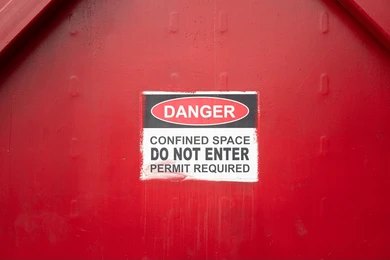
Confined space operations are highly risky, thanks to the presence of invisible hazards in the atmosphere. On top of that, Australia’s WHS laws are complex, and you must remain fully compliant to carry out such operations. Protect your workers with thorough risk assessments, constant monitoring of gases, strict permit-to-work systems, control hierarchy, and dedicated non-entry emergency rescue plans.
Key Takeaways
- Get all Permits and Logs: To enter a confined space, you must get written permits. Also maintain continuous atmospheric monitoring logs, and verify that all personnel are certified
- Continuously Run Multi-Gas Testing: Sensory checks may fail. You must check for oxygen levels and gaseous hazards before entry
- Implement Non-Entry Rescue Protocols: Dedicated observers must be on standby with non-entry retrieval equipment to carry out an emergency rescue operation
Closed spaces are partly or completely enclosed and do not experience continuous human occupancy. Operations that you carry out in such spaces carry some of the highest risks in Australian commercial, industrial, and remediation sites.
Closed spaces have a very specific atmospheric pressure and face the risk of oxygen deficiency, contamination by toxic elements, or engulfment. These can also become flammable. If you are a property owner, site manager, or a PCBU working with such closed spaces, you must strictly comply with the regulations that apply to them.
Read this blog to know the requirements and best practices to assess the risks in confined spaces.
Statutory Framework & Australian Legal Requirements
As a property owner/site manager, you must meet some clear legal obligations under the Australian Model Work Health and Safety (WHS) Regulations and AS 2865:2009 (Confined Spaces). You must conduct a confined space risk assessment and document the findings before you enter or begin work in a designated confined space.
To maintain full statutory compliance, you should maintain three critical records:
- Confined Space Entry Permit: This written authorization should include:
- the scope of work
- isolated hazards
- atmospheric readings before workers enter the space
- how long the work will take
- Atmospheric Test Records: Document the initial and continuous gas monitoring logs retained for mandatory audit periods.
- Training Competency Logs: Formally verify that all entrants, supervisors, and standby personnel hold current Registered Training Organisation (RTO) certifications (MSMWHS217/RIIWHS202E).
During a brownfield site remediation project, technicians needed to inspect underground storage tank excavations. We conducted a pre-entry hazard analysis. Through this, we detected hazardous volatile organic compounds (VOCs) and low oxygen levels. This allowed us to make the atmosphere toxin-free before workers began the work.
Key Hazards and The Risk Control Hierarchy
Atmospheric threats are some of the biggest causes of death in confined spaces. These include:
- Extremely low oxygen
- Build-up of toxic ground gases
- Concentrated vapour that may become explosive
When hazardous gases seep out from surrounding soil or groundwater, they can worsen conditions in contaminated sites or brownfield developments.
Confined space owners/managers should know that, while working in confined spaces, a risk assessment that systematically applies the following hierarchy of controls is essential.
| Control Tier | Practical Action in Confined Spaces | Direct Example |
|---|---|---|
| Elimination | Complete work without entering the space. |
Remote camera inspection probe or external high-pressure cleaning. |
|
Substitution |
Swap hazardous process or chemical with a safer alternative. | Use water-based cleaners instead of volatile solvent degreasers. |
| Engineering | Isolate hazards or apply forced mechanical ventilation. |
Positive pressure blowers, lock-out/tag-out (LOTO) on mechanical agitators. |
|
Administrative |
Implement entry permits, standard operating procedures, and signs. | Issued Entry Permits, calibrated testing schedules, clear warning signage. |
| PPE | Provide safety equipment when risks cannot be fully eliminated. |
Air-supplied respiratory equipment, full-body harnesses, and lifelines. |
Table 1: The Risk Control Hierarchy Applied to Confined Spaces
Oxygen levels might drop without notice, and toxic gases (e.g. hydrogen sulphide) often do not have any noticeable sign or smell. Ensure your workers do not have to rely on their own senses for such issues. Keep monitoring the gases present in the confined space to remain legally compliant.
Atmospheric Testing and Best Practice Entry Procedures
Follow this test order in its sequence to monitor the atmosphere in the closed space:
- Step 1: check how much oxygen there is
- Step 2: test for flammable gases and vapours
- Step 3: test for toxic contaminants
Conduct a thorough confined space entry risk assessment to make sure that there are no potentially dangerous atmospheric threats when your workers enter the area.
|
Gas/Parameter |
Safe Entry Level/ Standard | WHS Compliance Threshold | Primary Site Risk |
| Oxygen (O₂) | 19.5% to 23.5% | Safe Work Australia standard |
Asphyxiation (<19.5%)/ Increased fire risk (>23.5%) |
|
Combustible Gases (LEL) |
< 5% Lower Explosive Limit | Action required at 5–10% LEL | Explosion or flash fire hazards |
| Carbon Monoxide (CO) | < 20 ppm (8-hr TWA) (from December 1st 2026) | Workplace Exposure Standard |
Toxic asphyxiation from combustion exhaust |
|
Hydrogen Sulphide (H₂S) |
< 10 ppm (8-hr TWA) | Immediate evacuation at >10 ppm |
Rapid paralysis of olfactory sense, sudden collapse |
Table 2: Safe Atmospheric Exposure Thresholds
A commercial property manager needed urgent drainage network sampling. SERS put in place a qualified standby observer, started real-time remote gas monitoring, and established mechanical winching apparatus. This ensured total compliance with AS 2865:2009 while eliminating hydrogen sulphide risks.
Confined spaces like cleanrooms can also get contaminated in some cases. To know more about how to monitor cleanrooms, read our other blog on: Cleanroom Air Monitoring: Particle Counts, Standards & Compliance.
Emergency Response Planning and Role Competency
You cannot rely on public emergency services for your rescue operations. This is non-compliant with WHS standards. You must employ a fully trained and equipped standby person/observer right outside the entry.
Key Standby Person Responsibilities:
Here’s what a standby person monitoring a confined space must do:
- Continuous Communication: They must maintain uninterrupted visual/audio contact with everyone inside the confined space.
- Environmental & Hazard Watch: They must constantly watch conditions outside the space for potential risks (e.g., generator exhaust drifting into ventilation intakes).
- Emergency Initiation: They must activate emergency rescue protocols as soon as an alarm is raised without entering the compromised area.
|
Verification Step |
Key Requirement | Responsible Person | Verification Status |
| 1. Hazard Identification | Soil, gas, and structural hazards identified. | Competent Assessor |
Completed |
|
2. Atmospheric Testing |
Air quality logged across all elevation zones. | Certified Gas Tester | Verified Safe |
| 3. Energy Isolation | All pipes, electrical lines, and valves locked out. | Site Supervisor |
LOTO Applied |
|
4. Permit Authorisation |
Confined Space Entry Permit signed and displayed. | PCBU/Manager | Authorized |
| 5. Emergency Readiness | Standby observer active with non-entry rescue equipment. | Emergency Standby |
Ready |
Table 3: Essential Confined Space Pre-Entry Checklist
The majority (>60%) of deaths in closed spaces happen because of untrained rescuers. Your emergency rescue plans must include retrieval systems that do not require entry (tripod winches/harness lifelines), so that workers can be rescued without entering the space.
Conclusion
You must maintain complete statutory compliance while managing high-risk confined spaces. Employ real-person emergency protocols and specialised monitoring tools. Most importantly, stay on top of the environment before and while your workers enter the space.
Do You Own or Operate Any Confined Space on Your Property?
Partnering with our experienced team at SERS will make sure that your site operations remain fully compliant with Australian laws and regulations protecting your workforce.
Frequently Asked Questions
How Often Must Gas Testing Equipment Be Calibrated for Confined Space Operations?
Gas detectors require bump testing before daily use and formal calibration every six months per AS/NZS 60079.29.2 standards.
What Medical Assessments Are Required for Workers Entering Confined Spaces?
Entrants should undergo baseline medical screenings, including lung function testing, cardiovascular assessments, and fitness tests for wearing respiratory equipment.
How Long Must a PCBU Retain Confined Space Entry Permits and Atmospheric Testing Records?
Under Australian WHS Regulations, PCBUs must retain entry permits for 28 days, extending to two years if incidents occur.
Can a Single Person Perform Both the Standby Observer and Site Supervisor Roles Simultaneously?
No, the Standby Person must remain solely dedicated to continuous monitoring and visual contact without undertaking distracting operational duties.
What Lighting Equipment is Legally Required Inside Potentially Explosive Confined Spaces?
Workers must strictly use intrinsically safe (Ex-rated), low-voltage portable lighting to prevent electrical ignition of flammable gases or dust.

