
Not sure how to manage noise levels for a government-funded construction project? This blog explains the best practices for noise monitoring and reduction and what authorised personnel should do in cases of noise level exceedance.
Key Takeaways
- Government-funded construction projects cannot work without causing noise, but there are ways to control them
- Best practices include pre-construction baseline noise monitoring, establishing a CNVMP, understanding tiered receptor hierarchy, using the right monitoring equipment
- Also following the essential protocols when noise limits exceed and ensure transparent reporting is essential
Being exposed to high levels of noise constantly can damage the cells in your ears over time. Construction noise levels are known to often cross 85 dB, and this level is considered by experts as the point where permanent damage begins. But you can rest assured because there are methods to reduce these noise levels so that they do not harm people in the surrounding areas.
Government-funded construction projects are necessary and cannot be simply stopped. Furthermore, constructions cannot happen without any noise. So, this blog aims to present and explain the best practices required for proper noise monitoring so that your eardrums are saved!
Why Government-Funded Projects Carry a Higher Noise Bar
Construction projects funded by the government are not just bound by the regulations of “Environment Protection Australia (EPA)”, under the “Nature Positive Plan”. They also hold public accountability obligations and have to carry out projects that are sanctioned.
However, according to the Transport Infrastructure Act 1994 (s9), all construction, operation, and maintenance of government-supported infrastructure needs to:
- Consider the best practice and national benchmarks
- Reduce adverse environmental impacts
Therefore, construction projects can happen, but they need to minimise community disruption. They are bound to face public scrutiny as they are publicly funded, and here comes the need for the best practices and mandatory CNVMPs.
The Best Practices for Noise Monitoring
The following are the best practices for noise monitoring that are applicable to the government-funded construction projects.
1. Pre-Construction Baseline Monitoring
Before you start assessments and monitoring, we need to set up a benchmark. According to Safe Work Australia, workers should not be exposed to noise levels of 140 decibels because it can instantly damage hearing. So before the monitoring begins, we need to consider the existing ambient noise levels.
It is usually the best option to consider a baseline noise study with Class 1 sound level meters for around 2 weeks. This complies with the AS/NZS IEC 61672.1:2019, which is relevant in Australia. Baseline noise study also needs to exclude wind speed and rainfall according to the Department of Environment and Science (DES) guidelines.
This helps understand the trigger and action levels that help establish the CNVMP details and acts as a legal defence if you face complaints later.
2. CNVMP – Mandatory for All Government Projects
Develop a “Construction Noise and Vibration Management Plan” or CNVMP that is mandatory for all major projects.
This plan should cover the following aspects.
- Project-specific information
- Baseline assessments and threshold limits
- Identified noise and vibration sources
- Mitigation strategies
- Monitoring plans
- Public outreach
- Compliance documentation
Furthermore, the following details should be considered while creating the CNVMP to understand the project’s scope and other possibilities.
- Properly identified tiered limits and sensitive receptors. For example, in Victoria, residences, it should be 55 dB(A) Leq during daytime, but it should be stricter if there are schools and hospitals nearby
- The action and trigger levels should be set below the guideline value as per the baseline assessments
- There should be nominated responsible personnel assigned to the noise monitoring for supervision and decision-making
- A proper complaint response procedure should also be developed along with correction action protocols. Both comes under the AS 2436-2010 (Guide to Noise and Vibration Control on Construction, Demolition and Maintenance Sites)
3. Tiered Receptor Hierarchy – Know the Limits of Sensitive Receptors
There are multiple receptor tiers that construction projects need to consider to make sure no one staying around the area feels uncomfortable. For example, according to the Noise Protocol, noise limits apply to the following areas:
- Residential areas and places where people sleep
- Child care centres or schools
- Campgrounds and parks in rural areas
- Hospitals
- Heritage-listed buildings
Now, local councils may put forward conditions that go beyond the usual EPA standards, specifically near schools and aged care facilities. So, equipment placing and construction scheduling should be decided according to receptor mapping during the planning phase.
4. Deploy the Right Monitoring Equipment
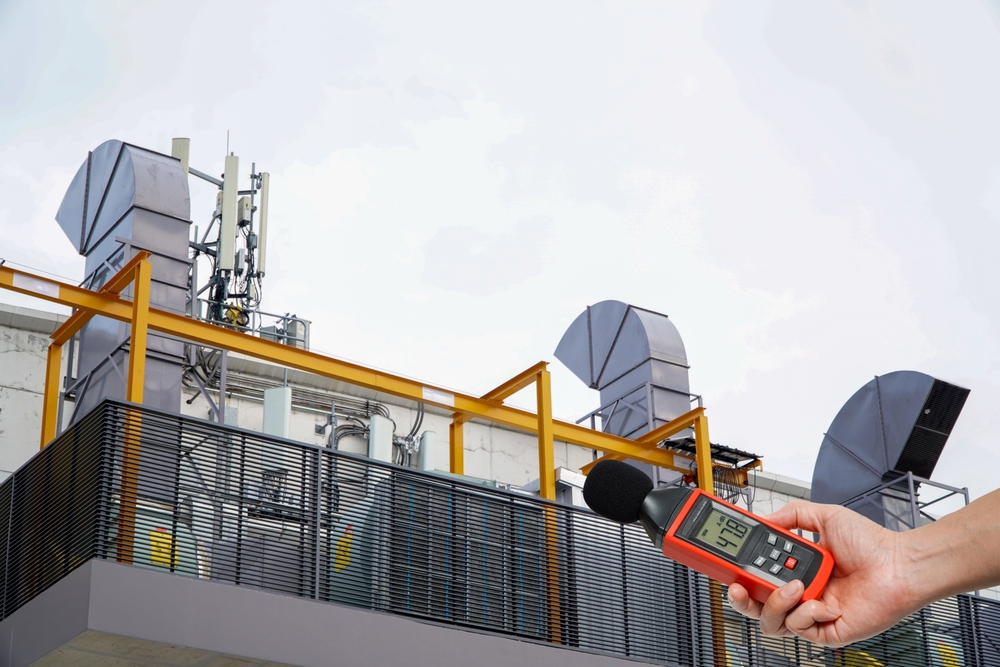
As per the AS/NZS IEC 61672.1:2019 to understand electroacoustic performance specifications, the Class 1 sound level meters should be used. It should be calibrated with an acoustic calibrator prior to deployment. The project handler should measure the Leq, LAmax, L90, and statistical descriptors while also exclude wind from the data.
They can also consider sending SMS/email alerts to the nearby people when the noise approaches trigger levels in case it is unavoidable. However, the alert should reach before the levels exceed and not after! Advanced environmental and remediation services offer real-time noise monitoring with automated reporting. Some also use noise dosimeter to understand how much the noise level is for individual people.
5. When the Limits Exceed – Steps of Exceedence Protocol
In some cases, when the limits do exceed, here’s what site managers and noise consultants should do:
- Ensure that there is a proper automated alert that reaches the site manager and acoustic consultant during exceedance
- The data should be reviewed to understand whether it is genuine or data anomaly caused by weather or a passing vehicle
- Immediate corrective action should be implemented. The project should be stopped or rescheduled, redirect equipment, and place additional barriers
- Every change implemented should be documented and authorised people should be notified
Following these standards can ensure better management of the noise during the construction project.
6. Transparent Reporting to Ensure Community Trust
Government-funded projects are expected to deliver community-facing reports apart from regulatory submissions. It applies to noise data reports as well. It is best to create monthly verified reports that can be submitted to authorised managers. Noise managers can also set up community notifications in case the work extends after standard hours.
Also Read: Noise Monitoring Strategies for Urban Development Projects in Australia
Are You Overseeing a Government Construction Project?
If you are looking for proper noise assessment and monitoring services for a government-funded construction project under you, you can consult us. Make sure your project does not harm your workers’ eardrums and disrupts community ambience!
Frequently Asked Questions
1. What Noise Limits Apply to Government Construction Projects in Australia?
Standard noise levels for workers and residential areas are 85 dB(A) Leq and 55 dB(A) Leq, respectively.
2. Is CNVMP Required for All Government Projects?
Yes. It is mandatory for all projects that are likely to exceed the DIN 4150-3:2016 vibration guideline values.
3. What is a Trigger Level and How Does It Differ From Action Level?
Trigger level is the early warning below the guideline levels and action level is the point at which corrective measures should be applied immediately.
4. When Should Noise Monitoring Begin for a Project?
It should start from pre-construction baseline noise assessment, usually 2 weeks prior to the construction starts.