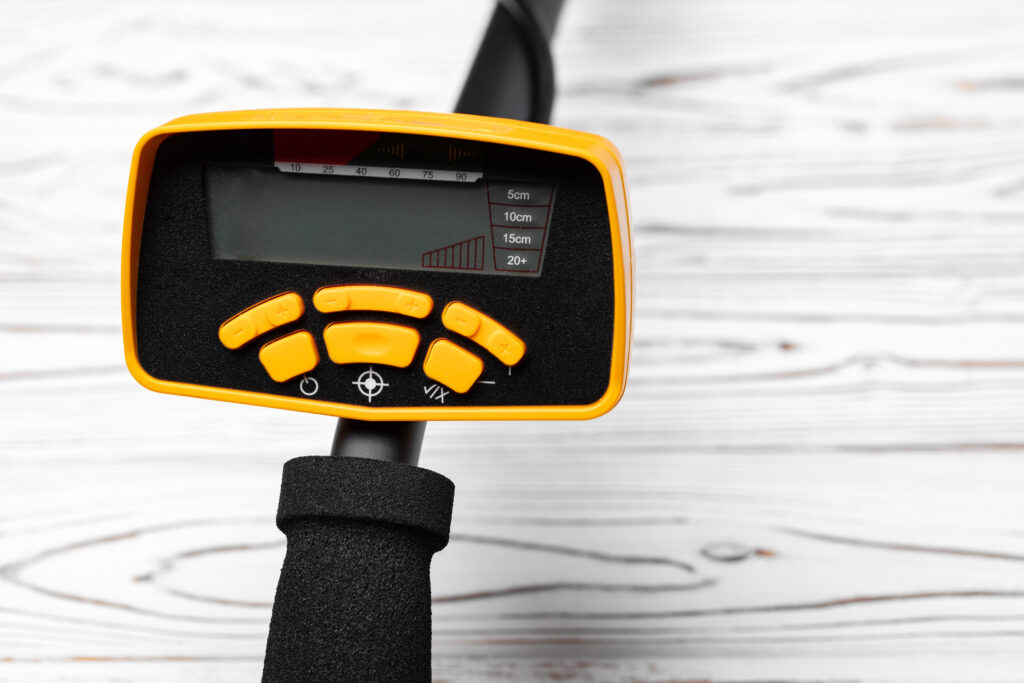

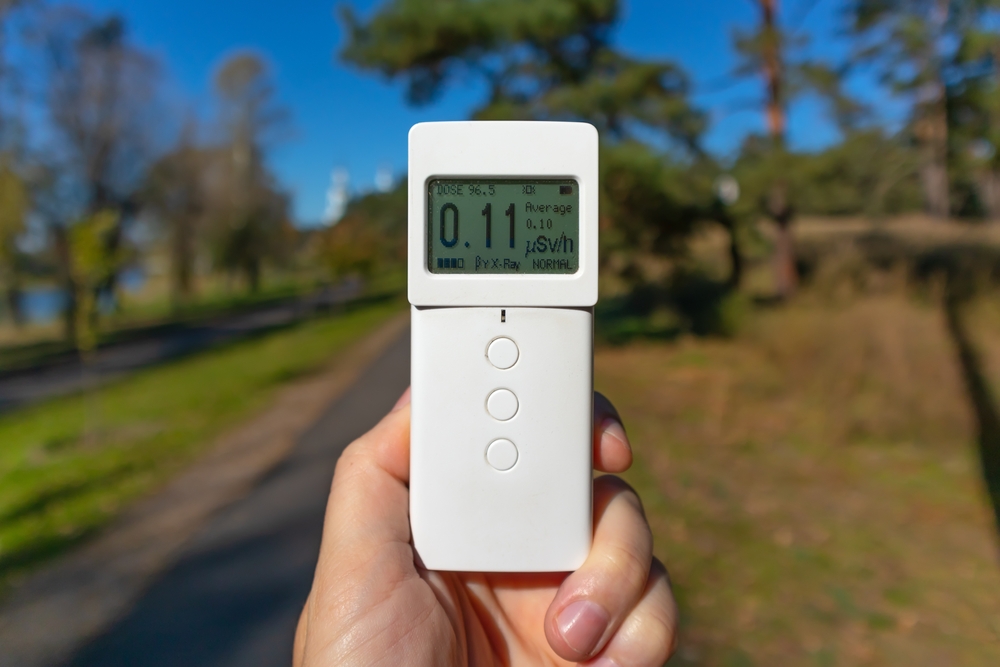
Unidentified workplace noise risks permanent hearing damage, regulatory penalties, and costly claims. A noise dosimeter pinpoints personal exposure levels, enabling businesses to comply with Australian WHS standards, apply effective controls, and protect workers’ hearing before damage occurs.
Key Takeaways
- Personalised Monitoring: Wearable noise dosimeters continuously track individual acoustic exposure across shifts to capture true worker sound levels
- Australian Compliance Standards: WHS regulations enforce strict limits of 85 dB(A), LAeq,8h average, and 140 dB(C) peak noise levels
- Actionable Hierarchy of Controls: Dosimetry reports guide PCBUs to implement targeted engineering, administrative, or PPE measures to reduce risk
Noise-induced hearing loss can be permanent; it’s common and preventable, yet harmful noise levels often go unidentified until measured. A noise dosimeter is the instrument that helps measure the ‘it sounds loud in here’ feeling, turning the ambiguous sensation into a WHS-compliant number.
This blog will explain what this noise dosimeter measures, what the Australian law requires regarding noise in workplaces, and how operators, owners, or residents can act on the noise reports.
What is a Noise Dosimeter and How Does it Work?
It is a small, wearable dosimeter for noise exposure clipped within 10 – 20 cm of a worker’s ear (lapel or collar), containing a microphone, a signal-processing chip, and a memory unit.
Unlike a handheld meter, it travels with the worker for a full shift, continuously integrating sound energy over time rather than capturing a single snapshot. The core outputs it produces include:
- LAeq,8h (the 8-hour time-weighted average)
- Peak level (LC,peak)
- Noise dose as a percentage
It complies with IEC 61252 and is calibrated against AS/NZ 1269.1 before and after each sampling period, using a NATA-traceable acoustic calibrator.
Acceptable Noise Levels in the Workplace: The Australian Standard
What counts as acceptable noise levels in the workplace under the Model WHS Regulations? It is an LAeq,8h exposure standard of 85 dB(A) averaged over an 8-hour shift, and a peak level that must never exceed 140 dB(C). Here’s what you should know:
| Parameter | Limit/Value | What It Means |
|---|---|---|
| Exposure standard (LAeq,8h) | 85 dB(A) |
Time-weighted average noise a worker can be exposed to over an 8-hour shift |
|
Peak noise level (LC,peak) |
140 dB(C) | Must never be exceeded, even momentarily (e.g. impact tools, explosions) |
| Exchange rate | 3 dB |
Every 3 dB rise doubles sound energy and halves the permissible exposure time |
|
Dose threshold |
80 dB(A) | Minimum sound level counted toward the cumulative noise dose calculation |
| Governing standard |
AS/NZS 1269.1:2005 |
Sets methodology for occupational noise measurement and assessment in Australia |
| Framework transition | WEL from 1 Dec 2026 |
New Workplace Exposure Limits replace WES; reassess existing monitoring data |
Table 1: Standard Noise Limits in Australia
From 1 December 2026, Safe Work Australia’s new Workplace Exposure Limits (WEL) framework replaces the current Workplace Exposure Standards (WES). However, this does not apply to noise exposure levels. The noise standard remains 85 dB(A) LAeq,8h and 140 dB(C) LC,peak under the Model WHS Regulations.
Noise Dosimeter vs Sound Level Meter: Choosing the Right Tool
Australian workplaces commonly use the two main instruments, namely, the noise dosimeter and sound level meter. A sound level meter is a handheld or tripod-mounted device, which is best for mapping noise across an area, identifying specific sources, and verifying engineering controls after they are installed.
A noise dosimeter is worn by each worker and is the primary method for compliance assessment where workers help record the levels by moving between tasks, areas, or noise levels through their shift. The dosimeter automatically captures what the worker actually hears, including short high-level events that an area survey can miss.
| Feature | Noise Dosimeter | Sound Level Meter |
|---|---|---|
| Position | Worn on the worker (shoulder/collar, near ear) |
Handheld or tripod-mounted at a fixed point |
|
Measures |
Personal cumulative exposure (LEX,8h, dose %) | Instantaneous or area sound levels |
| Best suited to | Workers who move between tasks or locations |
Fixed-location screening and source identification |
|
Governing standard |
IEC 61252 |
|
| Typical application | WES/WEL compliance assessment, dose reporting |
Noise mapping, frequency analysis, control verification |
Table 2: Comparing Noise Dosimeter with Sound Level Meter
A Melbourne fabrication workshop used shift-long dosimetry to discover two machine operators exceeded 100% noise dose despite a ‘moderate’ average factory sound level, triggering engineering controls and hearing protection zones that brought both workers back under the 85 dB(A) standard.
Conducting a Workplace Noise Assessment: Process & OHS Obligations
According to the PCBU’s obligations under the Model WHS Regulations and Occupational Health and Safety Regulations 2017, PCBUs need to commission a dosimetry-based workplace noise assessment service. Here’s how the whole process takes place:
| Step | What It Involves |
|---|---|
| 1. Identify |
Review tasks, machinery, and areas likely to exceed 85 dB(A) |
|
2. Assess |
Commission dosimetry or a sound level survey by a qualified professional |
| 3. Control |
Apply hierarchy of controls: eliminate > substitute > engineer > administer > PPE |
|
4. Protect |
Provide hearing protection where controls can’t fully reduce exposure |
| 5. Monitor health |
Arrange baseline and periodic audiometric testing for at-risk workers |
|
6. Review |
Reassess at least every 5 years, or after equipment/process changes |
Table 3: Typical Noise Assessment Process
A regional food processing plant scheduled quarterly noise monitoring after a new packing line installation, identifying a single conveyor motor as the dominant source. Replacing its enclosure reduced ambient levels by 6 dB, cutting worker exposure restrictions almost in half.
Choosing a Wearable Noise Dosimeter: Features That Matter
For businesses evaluating their own screening equipment (wearable noise dosimeter) before commissioning a professional survey, here’s what you need to check:
- Type 2 equivalent or better accuracy
- Correct exchange-rate/threshold/criterion configuration for the Australian standard
- Motion or wear-sensing to flag tampering
- Sufficient battery life for a full shift (or multi-day runs)
Furthermore, for hazardous sites, there should also be an intrinsic safety certification (IECEx) so testing can proceed around flammable gases or fuels without extra hazard controls.
Never assume a quiet-sounding workplace is compliant. Impulsive noise from tools like nail guns or presses can spike well above 140 dB(C) peak in an instant, causing permanent hearing damage even if the average shift noise level still seems acceptable.
Also Read: Australia’s Updated Workplace Exposure Standards 2026: What’s Changed and Why
Consequences of Non-Compliance & Why Professional Assessment Matters
Noise-induced hearing loss is irreversible, and it comes under Australia’s most common accepted workers’ compensation claims. Outside the medical/human cost, for undocumented or inadequate noise management, PCBUs face:
- Regulator penalties
- WorkCover claims
- Reputational damage
A defensible, audit-ready assessment with calibrated instrumentation, SEG methodology, and a documented control plan makes the risk manageable instead of a costly compliance failure.
Conclusion
Measuring noise accurately is the starting point for protecting hearing, not the end goal. The real value lies in acting on the results with proper controls and review cycles. It helps people work in an environment that does not harm their health or cause distress from loud noise.
Not Sure Whether the Noise at Your Workplace is Harmful or Not? SERS Can Help Measure It!
We offer professional noise testing and monitoring services for all workplaces. Contact us to learn more about the service, or call to book a service now!
Frequently Asked Questions
How Frequently Should Noise Dosimeters Be Field-calibrated During a Monitoring Session?
Perform an acoustic calibration directly before and immediately after every sampling session to ensure data accuracy and integrity.
Can Workers Wear Noise Dosimeters While Operating in High-moisture or Outdoor Environments?
Yes, but the instruments must feature adequate IP (Ingress Protection) ratings and protective windscreens to prevent weather-related measurement errors.
Who is Qualified to Conduct and Sign Off on an Official Workplace Noise Assessment?
Assessments should be conducted by a qualified occupational hygienist or an acoustic consultant trained in AS/NZS 1269 methodology, like our consultants at SERS.
How Long Must a PCBU Retain Workplace Noise Measurement and Dosimetry Records?
WHS regulations generally require keeping noise assessment records for at least 30 years, matching health monitoring record timelines.
What is the Difference Between a Class 1 and Class 2 Noise Dosimeter?
Class 1 meters offer higher precision across broader frequency ranges, whereas Class 2 meters suit general workplace field assessments.