

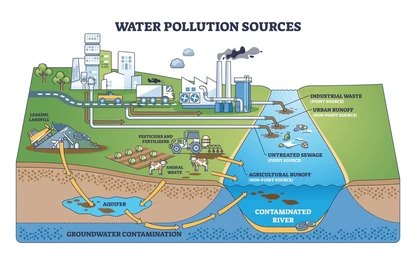
Groundwater contamination from industrial and agricultural activity is one of the most persistent environmental risks facing Australian local councils. Understanding the pressure points and acting on them early is important. This is what separates manageable risk from expensive liability.
Key Takeaway
- Human activity risks water: Industrial chemicals, mining drainage, and agricultural fertilisers heavily pollute the underlying groundwater systems.
- Assessments prevent high costs: Regular groundwater impact assessments identify hidden pollution before remediation costs and health risks skyrocket.
- Climate change worsens impact: Shifting rainfall patterns and flooding accelerate how quickly contaminants move into local aquifers.
- Proactive monitoring limits liability: Using a systematic bore network to track plumes early protects councils from third-party legal claims.
Councils across Australia are responsible for overseeing land use that directly affects underlying aquifers. Industrial operations, farming activity, and legacy site contamination all place sustained pressure on groundwater systems.
These pressures go undetected until contamination becomes huge without structured groundwater resource and impact assessments. By that point, remediation costs and community health risks are significantly higher.
Why Industrial and Agricultural Activities Are a Groundwater Risk
Groundwater does not sit still. It moves through soil and rock, picking up contaminants from the surface and redistributing them across large areas. Industrial sites and agricultural land are two of the most consistent sources of that contamination.
Industrial Sources of Groundwater Contamination
Industrial activity introduces a broad range of chemical compounds into the subsurface environment. The most common include:
- Hydrocarbons from fuel storage, vehicle workshops, and manufacturing sites
- Heavy metals like lead, arsenic, and chromium from metal processing operations
- Solvents and degreasers from industrial cleaning processes
- Leachate from unlined or ageing waste disposal sites
- Process chemicals from mining operations, including acid mine drainage
The impact of mining on groundwater is huge in regional Australia. Acid drainage, tailings seepage, and dewatering activities alter the chemistry and flow patterns of local aquifer systems for decades.
Agricultural Sources of Groundwater Contamination
Agricultural land use introduces a different but equally damaging set of contaminants. The main contributors are:
- Nitrates and phosphates from synthetic fertilisers and animal waste
- Pesticides and herbicides are applied to crops and pastures
- Irrigation return flows carrying dissolved salts and agrochemicals
- Effluent from intensive livestock operations such as piggeries and feedlots
These compounds move into groundwater quickly in areas with shallow water tables. Councils managing peri-urban or mixed-use land face a compounded risk when agricultural and industrial zones sit in close proximity.
What a Groundwater Impact Assessment Covers
An assessment of groundwater impact factors gives councils the factual basis they need to make defensible planning and enforcement decisions.
A thorough assessment typically includes:
| Assessment Component | Purpose |
|---|---|
|
Baseline water quality sampling |
Establishes pre-impact reference conditions |
| Contaminant source identification |
Maps industrial and agricultural inputs |
|
Aquifer vulnerability mapping |
Identifies high-risk recharge zones |
| Receptor pathway analysis |
Determines who and what is exposed |
|
Monitoring bore installation and sampling |
Tracks changes over time |
| Risk characterisation |
Informs remediation thresholds and triggers |
Table 1: Assessment Components and Their Purpose
Groundwater resource and impact assessments are not a one-time exercise. Ongoing monitoring is essential, particularly where land use changes or new development is proposed.
The Role of Climate Change in Groundwater Planning
The impact of climate change on groundwater is an increasingly critical factor for council planning teams.
Reduced rainfall in many parts of southern and western Australia is lowering groundwater recharge rates. At the same time, more intense rainfall events are accelerating contaminant transport from the surface into aquifers.
Key climate-related groundwater risks councils should account for include:
- Declining recharge in drought-prone catchments is reducing dilution capacity
- Saltwater intrusion into coastal aquifers as sea levels rise
- Increased agricultural irrigation demand is intensifying fertiliser and pesticide application
- Flooding events mobilise legacy contamination from historical industrial sites
Planning frameworks that ignore climate projections will underestimate both the pace and extent of future groundwater impacts.
What are the Best Groundwater Monitoring and Remediation Methods
Surface inspection and occasional sampling are not enough. Effective groundwater monitoring and remediation requires a systematic, site-specific approach.
The most reliable methods used in Australian council contexts include:
| Method | Application |
| Bore network monitoring | Tracks contaminant plume movement over time |
| In-situ chemical treatment | Targets specific contaminants in the subsurface |
| Pump-and-treat systems | Extracts and treats contaminated groundwater at the surface |
| Permeable reactive barriers | Passive interception of contaminant plumes |
| Source zone removal | Eliminates the primary contamination driver |
Table 2: Different Remediation Methods and Their Application
The groundwater monitoring and remediation impact factor extends beyond the affected site. Contaminated groundwater can migrate to neighbouring properties, waterways, and water supply bores, creating third-party liability for councils that delay action.
When Councils Should Commission an Assessment
Waiting for visible contamination is too late. Councils should commission an assessment of groundwater impact factors when:
- A new industrial, mining, or intensive agricultural operation is proposed in a sensitive catchment
- A legacy industrial site is being rezoned or redeveloped
- Residents near farming or industrial areas report changes in bore water quality
- Post-flood land use reviews are underway
- Environmental complaints or licence breaches have been reported
Early assessment gives councils the evidence base to act. This can mean requiring remediation from a responsible party, updating local planning controls, or triggering regulator notification.
Learn how timely bore water testing can lead to sustainable groundwater use.
Work with SERS on Groundwater Assessment and Monitoring
SERS provides groundwater impact assessments, bore installation and sampling, and remediation planning for local councils and government bodies across Perth, Brisbane, Sydney, and Newcastle.
Our NATA-accredited laboratory processes water samples to Australian standards, and our consultants deliver clear, actionable reporting that supports planning decisions, regulatory compliance, and community accountability.
If your council is managing industrial or agricultural land use near sensitive groundwater systems, contact the SERS team today for a site-specific assessment.
Frequently Asked Questions
Does a Council Have Legal Liability if Groundwater Contamination Originates From a Site It Approved?
Liability depends on what the council checked and how they managed known risks before approving the project. Councils that kept records of groundwater assessments and actively monitored the site are better protected against claims.
How Many Monitoring Bores Are Typically Needed for an Agricultural or Industrial Site Assessment?
The number of bores needed varies. This depends on the site’s size, its water layers, and the type of contamination risk.
Can Groundwater Contamination From One Property Affect a Neighbouring Council’s Jurisdiction?
Yes, it does. Pollution in groundwater doesn’t stop at property lines or council borders. When contamination crosses these boundaries, neighbouring councils and state environment regulators must work together to test and manage it.
What Australian Regulations Govern Groundwater Protection in Industrial and Agricultural Zones?
Contamination rules are set by each state using national guidelines, water laws, and local codes. SERS consultants work across all states and can explain the specific rules for your area.
How Long Does a Groundwater Impact Assessment Take for a Medium-sized Industrial Precinct?
Setting up bores and getting the first report takes six to twelve weeks. After that, testing is usually done two to four times a year, depending on the risk and local rules.