
Undetected asbestos risks heavy fines, project delays, and severe health hazards. Identifying material friability ensures strict regulatory compliance, accurate contractor licensing, and safe, liability-free remediation to protect your site, workers, and project budget from costly legal complications.
Key Takeaways
- Legal Thresholds: Friable asbestos always requires a Class A licence, while non-friable typically needs Class B above 10 m²
- Risk Factors: Degradation transforms low-risk bonded asbestos into friable material, sharply increasing airborne fibre hazards and liability
- Contaminated Soil: Asbestos fines and loose fibres in soil require specialist environmental investigations and remediation before development
Two asbestos-containing materials can look the same on a demolition site. Yet, they can trigger completely different licensing rules, notification duties, and penalties. The difference comes down to a single technical property: friability.
For Australian site owners, operators, and residents, understanding this distinction isn’t academic. It determines who can touch the material, what approvals are needed, and who carries liability if something goes wrong.
This blog will compare non-friable and friable asbestos to show what legally changes for you during demolition or construction projects.
What Actually Makes Asbestos “Friable” or “Non-Friable”?
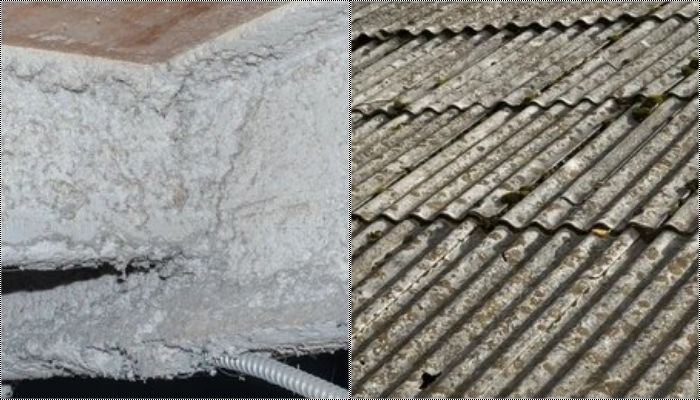
Friable asbestos-containing material can be crumbled, pulverised, or reduced to powder by hand pressure when dry. This is what is friable asbestos material in the strict legal sense, and it includes pipe lagging, sprayed insulation, and severely weathered sheeting.
Non-friable asbestos, more commonly called bonded asbestos, describes material where fibres are locked into a rigid matrix such as cement or vinyl resin, so it cannot be crumbled by hand while intact.
| Feature | Friable Asbestos | Non-Friable (Bonded) Asbestos |
|---|---|---|
| Physical state | Crumbles to powder by hand when dry |
Bonded into a cement/resin matrix; cannot be crumbled by hand while intact |
|
Common materials |
Pipe lagging, sprayed insulation, asbestos rope/gaskets, severely degraded sheeting | Fibro cement sheeting, flat/corrugated roofing, eaves, vinyl floor tiles, switchboards |
| Fibre release risk | High, even without disturbance |
Low while intact; rises sharply if cut, drilled, sanded, or broken |
|
Typical building age |
Pre-1980s, especially insulation/lagging applications | Pre-1990 construction generally |
| Removal licence required | Class A, for any quantity |
Class B (or Class A) above the state area threshold; limited exemptions may apply below it |
Table 1: Comparing Friable and Non-Friable Asbestos
Why the Distinction is the Single Biggest Risk Factor
Regulators across every Australian jurisdiction classify asbestos by friability rather than product type. This is because friability is the only factor that reliably predicts airborne fibre release: the actual health hazard.
Non-friable material in sound, undisturbed condition poses comparatively low risk; friable material can shed fibres from a light breeze or a knock. A weathered, crumbling piece of cement sheet that gets converted from bonded to friable, the legal obligations shift with it. This is regardless of what the material was originally manufactured as.
Asbestos import, manufacture, and reuse have been banned in Australia since 31 December 2003, but legacy material remains legal to retain if intact and undisturbed; the obligation is to manage it safely, not necessarily remove it immediately.
How the Distinction Changes Your Legal Obligations
All state and territory regulators issue separate licences for friable and non-friable asbestos removal. Furthermore, the friable vs non-friable asbestos classification determines which one applies to your project. The table below explains what you need to know.
| State | Non-Friable (Class B) Threshold | Friable (Class A) Requirement | Regulator |
|---|---|---|---|
| New South Wales | Licence required above 10m²; limited unlicensed removal permitted below this with safe work practices | Any quantity requires a Class A licence |
SafeWork NSW |
|
Victoria |
Licence required above 10m²; unlicensed removal is strictly limited to non-friable asbestos, provided total removal time does not exceed 1 hour in any 7-day period, and the area is under 10m² | Any quantity requires a Class A licence | WorkSafe Victoria |
| Queensland | Licence not required at 10m² or less, but safe work procedures still apply | Any quantity requires a Class A licence with a nominated supervisor |
WorkSafe Queensland |
|
South Australia |
Class B required above 10m² | Class A licence is required for friable asbestos in any quantity, which also permits non-friable removal | SafeWork SA |
| Western Australia | Class B required above 10m²; unlicensed removal permitted at or below this with safe work practices | Any quantity requires a Class A licence (also authorises non-friable work) |
WorkSafe WA |
|
Tasmania |
Licence required above 10m²; no licence needed at or below this threshold | Any quantity requires an asbestos removalist licence covering Class A work |
WorkSafe Tasmania |
Table 2: State-Based Legal Thresholds
Site owners and PCBUs carry duties regardless of who does the physical work:
- Maintaining an asbestos register
- Commissioning a competent assessment before renovation or demolition
- Notifying the regulator where required
- Ensuring only appropriately licensed contractors are engaged
Getting the classification wrong is not a paperwork error; unlicensed friable work voids most insurance and can trigger simultaneous regulator prosecution, EPA infringement, and remediation orders.
A Sydney landlord renovating a pre-1980 rental discovers crumbling pipe lagging in the subfloor. Because the material is friable, only a Class A licensed removalist and an independent asbestos assessor can legally manage removal and clearance before the tenants return.
Beyond the Building: Friable Asbestos in Soil and Land Assessment
Friability matters just as much below ground as above it. Under the National Environment Protection (Assessment of Site Contamination) Measure (NEPM), soil investigations distinguish between different Asbestos categories (Table 2).
The category determines whether a site needs a Preliminary or Detailed Site Investigation before works can proceed. You should treat any asbestos in soil as a contaminated land issue, not just a building hazard.
Non-friable fragments buried at depth may be manageable in place, while friable material at or near the surface typically demands remediation before a Site Auditor will sign off.
| Category | Definition | Assessment Implication |
|---|---|---|
| Asbestos Fines (AF) | Asbestos material passing a 7mm x 7mm sieve (includes both free fibres and small fragments passing a 7mm sieve) |
Treated as friable; drives Health Screening Level assessment |
|
Fibrous Asbestos (FA) |
Loose fibrous material in a degraded condition | Treated as friable; requires specialist risk assessment |
| Asbestos-Containing Material (ACM) | Bonded fragments not meeting AF/FA criteria |
Screened against %w/w residential/commercial thresholds |
|
Assessment pathway |
Preliminary Site Investigation → Detailed Site Investigation |
Remediation and validation follow if screening levels are exceeded |
Table 3: Categories of Asbestos Found in Sites
Visual inspection alone cannot confirm friability once asbestos is buried or weathered in soil. Laboratory analysis under AS4964 is the nationally referenced method, and sampling itself can release fibres if not conducted by a qualified environmental consultant.
Also Read: Real-Time vs. Static Asbestos Air Monitoring: How to Choose the Right Method
A developer planning to subdivide a former industrial site in Queensland commissions a Detailed Site Investigation after preliminary sampling detects Asbestos Fines in fill material, allowing remediation costs to be quantified before settlement rather than after construction begins.
Conclusion
The line between friable and bonded asbestos is not a technicality; it decides who can legally do the work, what approvals apply, and who is liable if it goes wrong. Whatever the property type, engaging qualified environmental consultants for accurate classification protects your project, your compliance position, and everyone’s health on site.
Found Asbestos on Your Site? Make Sure It Is Remediated Before Your Project Starts
Do not let legal issues halt your project midway! Hire our site assessment and remediation professionals to get asbestos inspection, testing, and monitoring services today. Contact us for a site assessment.
Frequently Asked Questions
How Should Asbestos Waste Be Packaged and Disposed of Legally?
Asbestos waste must be double-wrapped in heavy-duty plastic, clearly labeled, and transported directly to a licensed disposal facility.
Who Pays for Asbestos Testing and Mitigation in a Commercial Lease?
Responsibility depends on lease terms, but the Person Conducting a Business or Undertaking (PCBU) usually carries legal liability.
What Air Monitoring is Required During Non-friable Asbestos Remediation?
While optional for minor non-friable work, air monitoring is recommended near public spaces to verify safe exposure levels.
How Often Must a Commercial Asbestos Register Be Updated?
Registers must be updated whenever new asbestos is identified, condition changes, or material is removed, at a minimum every five years.
What Are the Health Risks Associated With Asbestos Exposure?
Inhaled fibers cause incurable lung diseases, including mesothelioma, asbestosis, and lung cancer, often decades after initial exposure.