
In Australia, a Noise Impact Assessment (NIA) is needed if your proposed activities or developments can potentially produce noise exceeding the limit prescribed in sensitive areas and timings. The limits are set by the state and local governments. NIA helps measure, predict, and evaluate the potential of noise and vibration on community amenity, human health, and the environment. If you want to learn more about NIA and when it is required, keep reading.
When is a Noise Impact Assessment Necessary?
NIA is necessary for ensuring compliance with state and local planning laws. It helps protect the health and amenity of communities and prevents nuisance. NIA is particularly necessary if the interaction between noise sources exceeds set limits.
Scenarios Demanding NIA
- In Australia, an NIA is necessary in two scenarios.
- The first scenario is when new developments take place, be it industrial, commercial, transport, or residential.
- The second scenario is when upgrades are being made that can affect nearby sensitive areas like hospitals, homes, and schools.
Noise Limits in Australia
Here are the limits set by authorities like the Environmental Protection Authority (EPA), Work Health and Safety (WHS), and Safe Work Australia (SWA).
| Area / Zone | Limits |
|---|---|
| Night Time Limit |
|
| General Residential |
|
| Workplace Limits |
|
Table 1: Noise Exposure Limits Set in Australia
Here are the specific scenarios in which noise impact assessment is required in Australia.
Before the Construction of Major Projects
NIA is required before the construction of major projects like these.
- Housing Developments: NIA is required if the housing development is happening near industrial zones or transport hubs. The goal is to protect the residents of the future from excessive noise.
- Commercial Buildings: NIA is required if the development can impact surrounding noise-sensitive areas, like schools, hospitals, or residences. NIA is also required if the building is located in a mixed-use zone.
- Highways, Railways & Airports: NIA is required for major infrastructure projects, especially if they are likely to cause a significant environmental impact.
- Industrial Facilities: The NIA is needed as a part of the environmental authority and planning process. It is done for assessing the impact of potential noise on nearby sensitive areas.
For Industrial & Commercial Operations
NIA is required in these industrial and commercial operations.
- Manufacturing Plants: NIA is required for new as well as expanding facilities, especially if it is operating near residential zones or sensitive areas.
- Warehouses: NIA is required if noise from mechanical plants or vehicle movements exceeds the maximum allowed limit at neighbouring properties.
- Night-Time Operations: NIA is required if night-time operations are being run, as operations between 10 PM and 7 AM are subject to stricter noise limits.
- Events & Entertainment Venues: NIA and acoustic reports is needed for venues hosting live music or late-night trading.
During Environmental Approvals or Permit Applications
Here are the environmental approvals or permit application scenarios that demand NIA in Australia.
- Development Applications (DA): NIA is required for many statutory planning zones as a part of DA. This is particularly true for developments that can impact their neighbouring land.
- EPA/EIA Approvals: NIA is required by environmental authorities for approving activities that are significant to the environment, like wind farming or mining.
- Local Council Requirements: Noise from households and non-major industrial or commercial activities is regulated by local councils, who often demand acoustic reports for making DA. So, NIA becomes necessary.
When Modifying or Expanding Existing Infrastructure
NIA is also needed when expanding or modifying existing infrastructure. Here are some specific scenarios.
- New Equipment Installation: If new machinery is likely to introduce new nuisance-causing noise characteristics or increase overall noise levels, then NIA will be required.
- Increased Operational Hours: NIA will be necessary if proposed work hours extend into sensitive times like weekends and nighttime, when a lower maximum limit for background noise applies.
- Expanded Production Lines: NIA is required if new activities, increased capacity, or process changes lead to a substantial increase in noise or introduce a new noise character
- Change of Land Use: If the use of land in the surrounding area changes, like from industrial to residential, then a new NIA will be needed. Assessment will also be necessary if the use of the facility changes.
Why Noise Impact Assessments Matter
Wondering how important NIA is? Here are the reasons why it matters.
Legal Compliance & Risk Avoidance
Complying with Australian noise regulations through NIA helps avoid significant penalties, including stop-work orders and hefty fines. NIA also offers a structured approach for preventing common complaints by community members. Such complaints often damage a reputation or lead to a project stop.
Protects Public Health
NIA helps mitigate the health risks linked with excessive exposure to noise. So, it helps prevent serious issues like sleep disturbance, hearing damage, chronic stress, and reduced productivity in nearby communities.
Ensures Smooth Approvals & Planning Success
The success of development or expansion planning often depends on approval from the local council. So, a detailed NIA is frequently needed as a part of DA. Noise assessments help create technical reports for environmental submissions, thus streamlining the entire process of approval.
Community Relations & Social License
By conducting an NIA, you will be able to demonstrate a commitment towards sustainable and responsible development. This will help you build trust with local communities. You will get the social license needed for successfully and peacefully operate for the long term.
What are the Consequences of Not Having a Noise Impact Assessment?
In Australia, you can face significant legal, operational, and financial consequences for failing to conduct a required noise impact assessment. Here are the consequences you will face.
Development Application Refusal/Delay
Your development application can get delayed, put on hold, or rejected altogether if the planning authorities do not find sufficient information on noise impacts.
Fines and Legal Action
Both corporations and individuals can face legal action and substantial fines for not complying with development conditions and noise regulations. The penalty will depend on the jurisdiction and severity.
Orders and Site Closure
Regulatory authorities like the state-based EPAs and local councils can order you to stop noisy activities until you address the issue and meet compliance. They can also order you to shut down operations.
Retrospective Mitigation Costs
In case you start your project without proper NIA, you will be forced to implement expensive noise mitigation methods like insulation and sound barriers. Your operations may also be shut down if they cause noise pollution.
Community Disputes
If noise is not managed as per noise impact assessment guidelines, your projects may cause nuisance or distress to local residents. This can lead to disputes, complaints, and potential legal challenges from the community.
Reputational Damage
Non-compliance can damage the reputation of your business. It can also affect your relationship with community members and regulatory bodies.
What is the Process for a Noise Impact Assessment?
The noise impact assessment process involves surveying existing noise, predicting future noise using models, comparing the results with established standards, identifying impacts, proposing mitigation, and reporting the findings to authorities. Here are the steps involved in the NIA process.
- Project Review & Scoping: The development and its context are understood first. Sensitive receptors like schools and homes, and the potential sources of noise such as machinery and traffic, are identified.
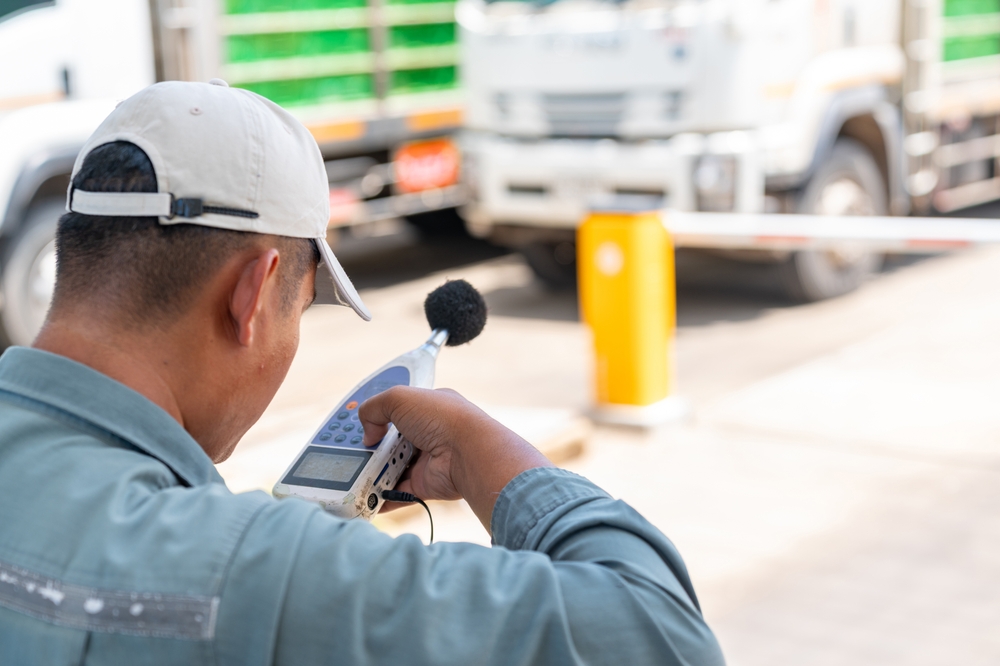
- Baseline Noise Survey: The current background noise levels at the site and surrounding areas are measured. Measurements are taken over time to confirm any existing condition.
- Noise Prediction & Modelling: Acoustic software is used for modelling how noise will propagate and affect receptors. The type of terrain and existing barriers are considered during modelling.
- Data Analysis & Assessment: The model prediction and survey data are analysed, and corrections are applied for tone or impulse noise. The resulting noise levels are then compared against relevant guidelines for daytime and nighttime limits.
- Impact Evaluation: Evaluation is done to determine if the predicted noise levels exceed the limits set by authorities. It is also determined if the noise levels are causing any significant negative impact on sleep, health, and well-being.
- Mitigation Design: If a significant impact of noise is identified, then solutions like enhanced insulation, acoustic barriers, operational adjustments, and layout changes are proposed.
- Reporting: All the data, predictions, methods, and mitigation steps are compiled into comprehensive reports. The report is adapted for local planning authorities.
- Monitoring (Optional): After the control measures are implemented, verify if they are effectively reducing noise levels.
Ready for a Professional Noise Impact Assessment?
An NIA is typically required if your proposed development or owned land can potentially introduce new sound sources in the sensitive areas. Addressing the sound levels and maintaining them within limits is an important function of NIA. It will help you protect the health of workers, occupants, and nearby humans. It also ensures compliance with relevant laws.
Different maximum noise levels are set for different types of development and sites. But the consequences of not performing NIA are severe, which can range from expensive reworks to hefty fines. So, get the noise levels and their impact assessed for your site today! Reach out to an environmental remediation service provider near you.
Frequently Asked Questions
Who Can Perform a Noise Impact Assessment?
In Australia, NIAs are performed by a number of professionals, including acoustic engineers, certified occupational hygienists, or qualified environmental consultants. It is performed by professionals who have expertise in measuring, modelling, and mitigating noise.
How Often Are Noise Impact Assessments Required?
In Australia, NIAs are typically needed as a part of the initial development application process. You need to perform it when starting a new project or when making significant modifications to an existing one.
Are There Exemptions for Noise Impact Assessments?
Yes, minor nose activities and some specific noise types are exempted from the NIA requirement. However, remember that the exemption does not apply uniformly throughout Australia, and is very much dependent on local councils’ guidelines and state regulations.