


A site survey can be the critical step in different fields that include construction, real estate, and urban planning. This is a comprehensive assessment process that involves the collection and analysis of data on a specific location, which involves decision-making as well as project planning. This concept will be explored in this post, with a focus on providing valuable industry insights.
What is a Site Survey?
A site survey refers to the process that entails collecting detailed information about a location and helps assess its suitability for a specific project or purpose. This process can include the measurement of the land features, assessing the environmental conditions, and evaluating the existing structures.
Site surveys are generally essential for ensuring that projects are feasible, compliant with the regulatory conditions, and are designed to meet the needs of the stakeholders.
Why is a Site Survey Important?
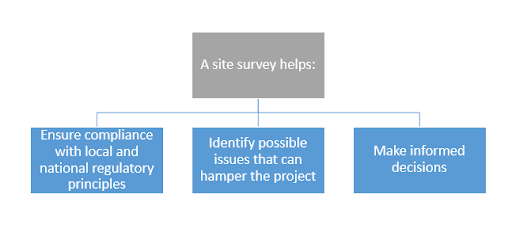
So, what is a site survey important for? It can serve various purposes. These purposes include:
To Ensure Compliance
Site surveys are crucial to ensure that the construction projects are compliant with the local regulations and building codes. Moreover, by assessing the site’s existing conditions, the surveyors can identify the potential issues that need to be addressed before the project proceeds. This can help avoid costly delays and the need for additional modifications.
To Identify Possible Issues
A thorough site survey can help identify the potential issues that can impact the project’s success. And what are some potential issues that can harm a project’s success? Elemental hazards, soil stability, and existing infrastructure are some of the common issues that need to be addressed to ensure a smooth project execution.
To Make Informed Decisions
A site survey relies heavily on having accurate data that allows stakeholders to make informed decisions regarding different aspects of a project. Some of the aspects in which informed project decisions are required include project design, planning, and budgeting. A site survey can ensure that the resources are not wasted, efficiently used, and that the project’s operations are aligned with its intended goals.
How Does the Site Survey Procedure Work?
The site survey procedure takes a detailed assessment approach of a location to gather data for the project planning that involves steps like defining the scope, site inspection, data collection, and so on. But, to learn how the exact procedure works in thorough detail, here is an examination of the complete process:
Step 1: Planning and Preparation
The first step in the site survey is proper planning and preparation. This step involves different activities such as defining the survey’s objectives, selecting appropriate survey methods, and proceeding to facilitate gathering necessary permits and approvals. Also, detailed planning ensures that the survey is conducted efficiently and all the relevant data is collected.
Step 2: Collecting the Data
During the phase for collecting the data, surveyors need to gather information about the site using several tools and techniques. These may include:
- Topographical Surveys: This involves mapping the land’s surface features.
- Geotechnical Surveys: This helps assess the soil and subsurface conditions.
- Environmental Surveys: It proceeds to evaluate the environmental factors, including vegetation and water resources.
Step 3: Data Analysis
Once the data collection process is completed, it is analysed to assess the site’s suitability for the intended project. This analysis supports the identification of any issues that may need to be addressed, and it also informs the overall design and planning process.
Step 4: Data Reporting
The overall findings from the site survey are compiled into a comprehensive report. This report will include detailed information about the site’s overall conditions, as well as potential issues, and recommendations for the project. This final report, therefore, acts as a key document that stakeholders need to review and can use in the decision-making process.
Step 5: Stakeholder Review
The final step of the site survey process is used to relay the findings and the results of the data analysis to the stakeholders and the clients. The results are presented to the architects, the engineers, and the clients to receive the final approval, and for transparency. Once the approval is received, the final planning can begin before the project commences.
In Summation
Thus, the importance of site survey lies in risk mitigation, accurate budget estimation, and ensuring compliance. Additionally, the procedure focuses on on-site data collection, followed by a thorough and guided analysis of the data, and producing an accurate and detailed report that is offered to the stakeholders.
Starting a Project Plan? Here’s How a Site Survey Can Help!
A site survey not only ensures that your project plan is accurate, is also leads to proper cost estimation, ensuring compliance, and convincing the key stakeholders of the project’s merits. So, if you are planning on starting a new project, do not delay with the site survey!
Frequently Asked Questions
What Happens if a Site Survey Finds a Negative Report Regarding a Potential Project?
If a site survey finds a negative report, firstly, the intensity of the report is focused on. If the areas where the issues are can be salvaged, steps are taken for rectification before the project can actively start.
Are Tools and Technologies Crucial to Site Surveys?
Modern site surveys use a combination of both traditional and advanced tools. Some technologies, such as aerial mapping and ground-penetrating radar technology, can be used for an improved understanding of the underground conditions.
Is a Site Survey a Generally Long-drawn-out Procedure?
The length of a site survey essentially depends on the size and the scope of the potential project. If the project is larger and has more moving parts, the site survey can take longer than smaller and simpler projects.
Can a Site Survey Be Helpful With Legal Disputes?
Yes. A site survey conducted offers objective, verifiable, and fully transparent evidence that is admissible in legal proceedings. Such evidence can, therefore, help settle legal disputes.