

Real-time vibration monitoring helps prevent costly equipment failure in the manufacturing sector of Australia. It enables proactive maintenance and early detection of issues, which reduces operational downtime, increases system efficiency, and lowers manufacturing costs.
Unplanned downtime costs millions to the Australian manufacturing sector every year. With the demands of Industry 4.0, you must have noticed that traditional reactive maintenance is no longer viable. Therefore, vibration monitoring is gaining popularity, as it serves as a proactive solution. By implementing continuous vibration sensors, you, as a manufacturer, can predict failures, reduce downtimes, and significantly boost operational efficiency. If you want to learn more about how real-time vibration monitoring reduces downtime in manufacturing, then keep reading.
The Hidden Cost of Inaction in Australian Manufacturing
A real-time vibration monitoring system can make Australian manufacturing businesses more competitive by cutting unplanned downtime, optimising production, and reducing repair costs. The systems can help you with early detection of unbalanced components, misalignment, and bearing failures. As a result, you can proactively prevent crippling supply chain disruptions, thus also strengthening your position in the local market.
The Cost of Inaction
As found by Siemens, the supply chain costs related to unplanned downtime in Australia have increased by 1.5 times in the past five years. Industrial manufacturers in Australia lose up to $260,000 per hour on average due to unplanned downtime. Inaction is further exacerbating the issue.
Lack of action is increasing emergency repair costs, missed production schedules, and supply chain disruption. Due to such inefficiencies, Australian manufacturers are becoming less competitive than their global rivals. So, proactive real-time vibration monitoring is essential for competitiveness as well as survival.
How Real-Time Vibration Monitoring Works
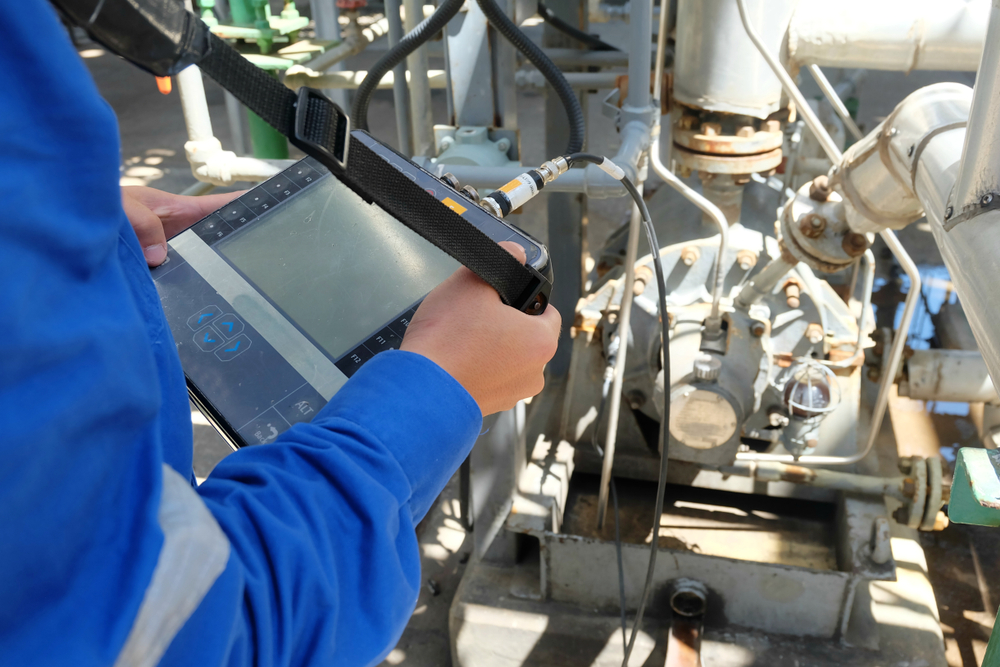
A real-time vibration monitoring system uses Internet-of-Things (IoT) sensors for tracking velocity, acceleration, and displacement on machinery. Artificial Intelligence (AI) and Machine Learning (ML) algorithms analyse the sensor data against normal operational baselines, which helps detect anomalies like bearing wear and misalignment.
The real-time analysis in vibration monitoring systems helps identify the issues early, so that you can perform predictive maintenance and fix issues before falling to a total breakdown. Here is a quick overview of the mechanism.
- Sensors & IoT: These are compact devices that can continuously collect real-time data on the vibration patterns of machines.
- Data Analysis: AI or ML models can distinguish normal operations from potential failures.
- Early Detection: Issues like bearing failures or component imbalances can be identified before they turn into complete machine breakdowns requiring expensive repairs.
Key Benefits for Local Industry
A real-time vibration monitoring system will let you shift from a reactive, time-based maintenance to a predictive, condition-based one. This is how early detection of issues becomes possible, which helps prevent secondary damage, avoid catastrophic failures, and extend asset life.
In the absence of early detection mechanisms, you and other manufacturers may end up violating strict Australian safety and compliance standards. By avoiding expensive emergency repairs and improving overall operational efficiency, you will be able to optimise costs.
Implementation Strategy for Manufacturers
Predictive maintenance enabled by real-time vibration monitoring significantly minimised downtime. So, you can implement a strategic approach by focusing on critical assets like pumps and motors. These assets or components are prone to frequent failures and also create production bottlenecks.
Choose real-time vibration monitoring sensors that are durable and IP67-rated, as they need to withstand harsh industrial environments. You also need sensors to be able to integrate data into existing systems. With continuous insights, your teams will be able to transition from reactive fixing to proactive maintenance. So, potential issues will be addressed before breakdown can occur, thus optimising production schedules and improving operational efficiency.
Ready for Real-Time Vibration Monitoring?
For Australian manufacturers, real-time vibration monitoring is necessary for achieving predictive maintenance capability. It helps cut unexpected downtime and boost efficiency, thus making your system more resilient and competitive. With early detection of faults, you will be able to prevent catastrophic failures and optimise maintenance. You will enjoy the resulting increase in system uptime and decrease in overall manufacturing cost. So, implement a real-time vibration monitoring system in your organisation today!
Frequently Asked Questions
What Are the Specific Mechanical Faults That a Real-time Vibration Monitoring System Can Detect?
A real-time vibration monitoring system can detect a wide range of mechanical faults. It can detect an imbalance in the rotation parts, caused by uneven mass distribution. It can detect misalignment in coupled machines like pumps and motors. It also detects bearing wear and defects, and mechanical looseness in components. Additionally, gearbox issues like improper lubrication or tooth wear can also be detected. The system further helps spot cavitation in pumps and resonance issues in motors.
What Are the Benefits of Real-time Vibration Monitoring Beyond Just Reducing Downtime?
Apart from cost savings from reduced downtimes and emergency repairs, a real-time vibration monitoring system will also enhance workplace safety and extend equipment lifespan. It will also improve the quality of your products.
How Quickly Can a Real-time Vibration Monitoring System Help Detect Problems?
With real-time analysis in vibration monitoring systems, mechanical problems can be generally detected 4 to 12 weeks before a catastrophic failure can occur. So, you will have enough time for planned and non-disruptive maintenance.