

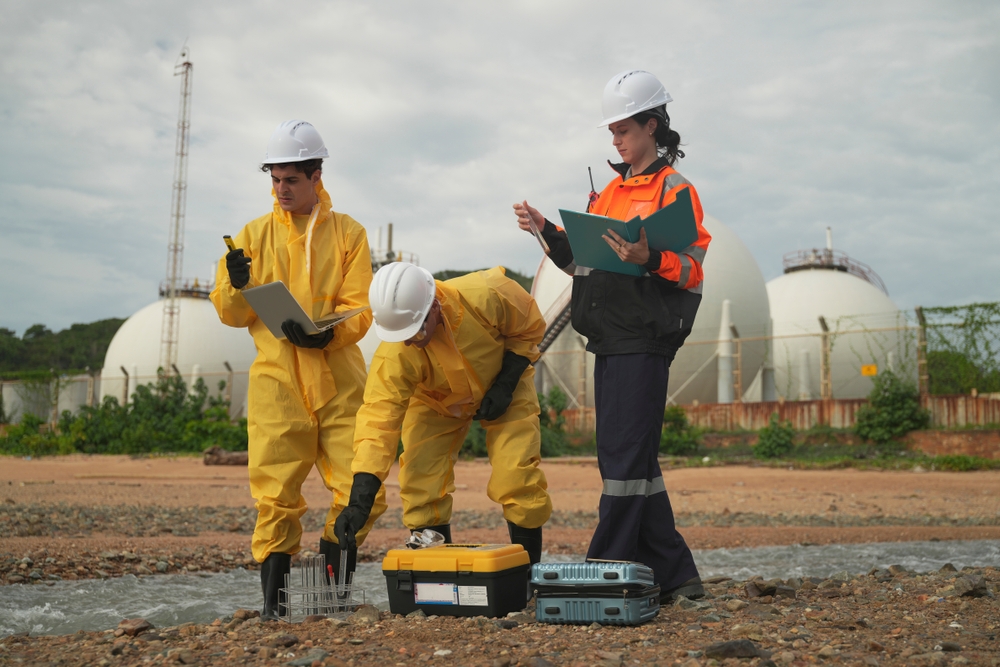
With the standard progression of modern infrastructures, such as large-scale construction projects and new industrial facilities, the lack of environmental monitoring is always prevalent. In the case of complex projects, traditional environmental oversight is still not properly followed. The siloed approach is often found to be inefficient, expensive, and predominantly risky. That is why remediation consultant companies are now turning to the Integrated Environmental Monitoring Plan (IEMP), which is a comprehensive framework that transforms compliance from a necessary burden into a powerful tool. In this blog, we are going to explore why IEMP is a smarter approach for complex projects.
Before diving into the benefits of the environmental monitoring plan, let’s understand why a siloed approach to environmental monitoring is detrimental for complex projects.
The Problem with Siloed Monitoring on Complex Projects
In the case of large-scale projects, different teams work in different ways to measure environmental compliance. Air quality teams monitor emissions, hydrologists track the quality of groundwater, and noise specialists check on acoustic boundaries. Each of them operates differently and generates individual reports. This is referred to as siloed monitoring. But what are the key issues associated with it? Let’s understand.
Knowledge Gaps
Since the teams work differently, it often creates crucial knowledge gaps. Environmental managers discover fragmented reports that do not portray the bigger picture. There is a lack of connectivity recorded in this approach.
Inefficiency in Monitoring
Secondly, one of the crucial disadvantages of the siloed monitoring approach is inefficiency. Multiple consultants must be mobilised for separate site visits, duplicating logistical costs, travel time, and administrative effort. Plus, they may lack the required knowledge to follow the project’s environmental compliance.
Lack of Proactive Risk Mitigation Standard
In the instance of siloed monitoring, the risk mitigation often gets hampered due to the lack of integration of data. The disjointed team always reacts late to the regulatory breach and cannot prevent one. In the case of projects dealing with sensitive issues such as site contamination, this late reaction is unacceptable and damages the reputation.
Then, how can an Integrated Environmental Monitoring Plan (IEMP) solve this issue? Let’s look at some of its key aspects.
Integrated Environmental Monitoring Plan (IEMP)
The Integrated Environmental Monitoring Plan (IEMP) is the strategic framework to address the inefficiencies of the siloed approach. In an IEMP, every environmental monitoring requirement is documented, from air quality and noise to groundwater and soil health.
Unified Documentation of Environmental Data
IEMP allows for documenting all environmental data across different protocols by using a consistent methodology. This is part of a comprehensive environmental management plan and helps to create a standardised report. Furthermore, the IEMP ensures that all the data collected is immediately contextualised against all other project data. This way, it centralises the environmental narrative and proactive management of data.
Here are some of the key benefits of IEMP and how it addresses the issue of siloed monitoring.
Benefit #1: Cost-Effectiveness and Resource Efficiency
In complicated site assessment projects, cost-effectiveness is considered the most crucial aspect of efficiency. Using an IEMP, the resources can be smartly optimised, which results in increased cost-efficiency. It tackles the often-hidden costs associated with inefficient monitoring.
Streamlining Field Activities
Instead of spending on five different consultants, a single IEMP coordinator is hired for multi-parameter monitoring of the site. This significantly cuts assessment costs and delivers an optimal outcome.
Reduced Administrative and Compliance Overheads
An IEMP is a key tool for reducing administrative waste. Using an IEMP, the need for manual cross-referencing of data is reduced. Furthermore, there is no need to compile the assessment report. IEMP smartly prevents project delays and substantial regulatory sanctions.
Benefit #2: Holistic Data and Better Decision Making
One of the key negatives of siloed data is that it provides very limited visibility, without painting the full picture. Using the IEMP helps to enhance the decision-making processes. In this approach, different data streams are combined, which helps in comprehensive precision.
Cross-Media Analysis
One of the great benefits of IEMP is its effective cross-media analysis. Using data from multiple data points, IEMP can pinpoint severe issues and help to reduce multifaceted environmental risks. It provides more insights regarding the issue and marks the key solutions.
Predictive Risk Modelling
Using the real-time, correlated data, teams can identify growing issues before they become problems. Using the data from IEMP, teams can predict certain contamination events that will interact with the current level of contamination. This predictive capability allows project management to implement mitigation strategies in advance, ensuring continuous compliance and significantly reducing overall project risk exposure.
Benefit #3: Simplified Reporting and Stakeholder Communication
In the context of complex projects, reporting the environmental management plan to the regulators, investors, and local communities can be a monumental task. Using the IEMP, this process becomes very simple, which makes it easier for smoother communication.
IEMP Follows One Consolidated Performance Summary
Instead of multiple reports covering different aspects of the environmental issues, the IEMP creates consolidated performance summaries. Regardless of its location, all data is placed and validated in one place. Therefore, the consistency guides the auditing process to be streamlined and ensures that all parties are using a single source of reliable data.
Building Trust through Transparency
A clearly structured report ensures trust. When a site assessment project or remediation project report is consolidated into a single coherent report, it enhances credibility. Using an integrated environmental monitoring plan, complex data can be simplified, and transparency can be maintained.
Key Components of a Successful IEMP
An effective Integrated Environmental Monitoring Plan has some structured components that ensure functional integration.
Comprehensive Site Assessment
One of the basics of a successful IEMP is an in-depth, comprehensive site assessment. Going beyond simple baseline assessments, this involves environmental risk mapping, identifying sensitive receptors, and mapping all the potential contamination pathways. Further, it helps remediation consultants to consider the necessary parameters such as the volatile organic compounds (VOCs) in groundwater or specific heavy metals in soil, which is compulsorily needed to be monitored.
Centralised Data Platform
IEMP uses a centralised data platform where all data is ingested and validated, regardless of its source or format. This platform needs to be capable of handling data from continuous monitoring sensors, daily field logs, and laboratory results. This also helps in the correlation of data sets, providing real-time visualisation of data.
Pre-identified Trigger Levels and Response Actions
An effective IEMP must use pre-defined trigger levels, which are landmarks set below the regulatory limits. When the platform notices that a certain parameter is increasing to this trigger level, it can automate a response action. This way, IEMP does not remain a simple environmental management plan. It becomes a comprehensive tool that uses proactive intervention before a compliance breach happens.
Implementation of IEMP on Your Next Project
Implementing an IEMP is essential for strategic alignment. There are a few phases through which you can implement IEMP in your next site assessment project.
- Consider IEMP as an essential project management function.
- Involved with experts to conduct the initial comprehensive site assessment and risk modelling.
- Therefore, a structured centralised data platform can be created, and all field equipment and methodologies can be standardised to maintain the consistency of data.
- Consider appointing an IEMP Manager who is responsible for the system’s operation and integration across all contractors and teams.
Final Words
The future of creating an environmental management plan requires expert integration. Modern projects are becoming more complex, and siloed monitoring is slowly becoming an outdated approach. The Integrated Environmental Monitoring Plan (IEMP) offers a consolidated solution that is both responsible and commercially effective. It reduces costs through efficiency and elevates decision-making through holistic data, thereby achieving greater accountability and trust.
Consult an Experienced and Certified Site Assessment Company for Your Next Project!
Looking for a site assessment company? Partner with an experienced and certified site assessment company for comprehensive IEMP reporting!
Frequently Asked Questions
What is the Primary Difference Between an IEMP and a Standard Construction Environmental Management Plan (CEMP)?
A CEMP focuses on the necessary mitigation measures and general monitoring needs for a specific project phase. Conversely, the IEMP is the comprehensive recording and monitoring of that data, emphasising centralising and correlating all environmental data in real-time.
Can an IEMP Be Adapted for Projects Involving Existing Site Contamination?
Yes, absolutely. An IEMP is ideally suited for site contamination remediation projects. Furthermore, it provides a unified picture of contaminant migration and the immediate efficacy of remediation measures.
How Does an IEMP Help With Regulatory Reporting and Compliance?
IEMP data are correlated and collected as a single source, validating the environmental data. Instead of submitting multiple disparate reports, the IEMP generates consolidated, standardised performance summaries.